

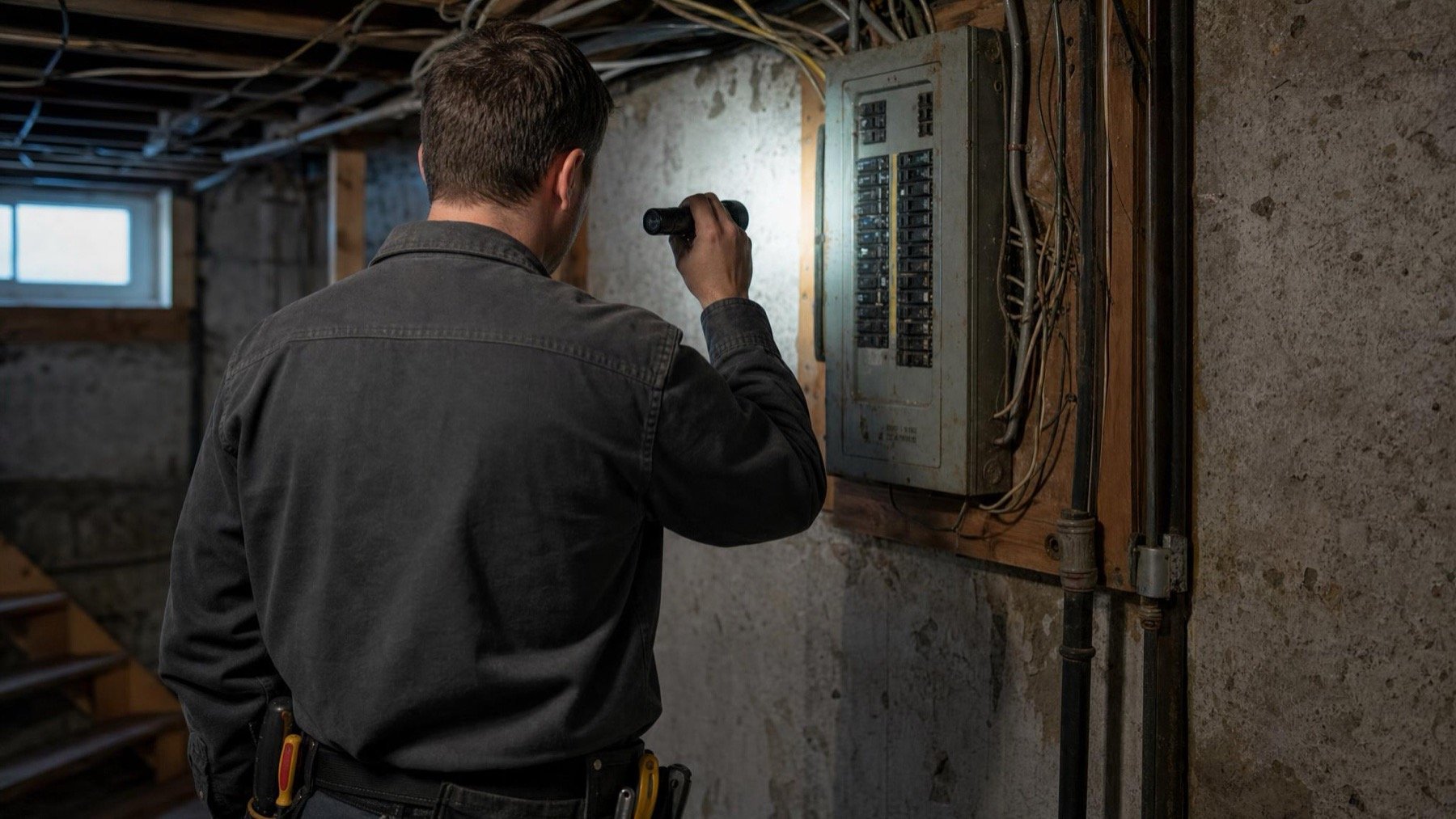
A general home inspection covers the whole house. An electrical assessment spends its time on the panel, the wiring you can see and the records behind them.
You have found the house, the offer is coming together, and the home inspector's report says the electrical needs further evaluation. Now what? A home electrical inspection by a licensed electrical contractor is the step that turns that vague line into specific answers: what wiring is in the house, how much capacity the panel has, and whether past work was done with a notification on record.
This guide is for buyers who want to understand what an electrical assessment covers, what it cannot see and how to use it in a purchase. We do this work for buyers and for owners getting ready to sell across Toronto and the GTA. The goal is the same both times: a clear picture before money changes hands.
A home inspector and an electrician look for different things
A general home inspector covers the roof, structure, plumbing, heating and electrical in one visit, so the electrical portion is a surface check by design. An electrician spends the whole visit on one system, with the tools to test it.
ESA guidance says that when a home is being bought or sold, a Licensed Electrical Contracting business can perform an Electrical System Safety Assessment. ESA guidance notes that this assessment is different from a general home inspection because it focuses only on the electrical. ESA's assessment page explains the scope in more detail.
What we look at during the assessment
- The panel: age, condition, capacity, spare spaces, signs of heat and whether breakers suit the wires they protect.
- Visible wiring: modern cable, knob and tube, aluminum branch wiring, or a mix left behind by past renovations.
- Outlets and switches: grounding, GFCI protection near water, loose devices, warm plates and reversed connections.
- Renovated areas: basements, kitchens and additions where work may have been done without a notification.
- Outside: the service mast, meter base, outdoor outlets and any hot tub or pool wiring.
Older wiring is not automatically a deal breaker, but it changes your budget and sometimes your insurance conversation. Our articles on knob and tube wiring and home insurance and aluminum wiring in older homes explain what each finding usually means.
Capacity is the other big question. If you plan to add an EV charger, a heat pump or a basement suite, the existing service may not be enough. Our comparison of 100 amp and 200 amp service is a good place to start.
Records matter as much as wiring
ESA guidance for buyers is to find out whether there are any open electrical notifications on the property before closing. An open notification can mean work that was started and never passed inspection, and ESA's page on buying a renovated home explains how your lawyer can request records as part of the purchase.
Ask the seller for any ESA certificates of acceptance from past renovations. A finished basement or a new kitchen with no record of an electrical notification is worth a closer look, and the assessment can focus there.
What an assessment cannot tell you
An electrician sees the panel, the visible cable in an unfinished basement and the devices on the walls. Wiring inside finished walls and ceilings stays hidden unless something is opened up. Even a careful assessment can only see what is accessible, and ESA's own general inspection description notes it does not include wiring concealed behind walls. A useful report tells you what was seen, what could not be seen and what that uncertainty means for your budget.
After you get the keys
If repairs are needed, ESA guidance says anyone you hire for that electrical work must be a Licensed Electrical Contractor. Once you own and live in the home, ESA guidance lets you do your own electrical work if you file a notification of work first. Either way, a notification creates a record that helps the next buyer too. Our Toronto electricians can turn an assessment into a prioritized repair plan, starting with anything that affects safety.
Electrical questions homeowners ask
What do they look for in an electrical inspection?
An electrical assessment looks at the panel, visible wiring, outlets, switches, grounding and GFCI protection, plus signs of overheating or unrecorded work. It focuses on safety hazards and on whether the system suits how you plan to use the home.
What is the biggest red flag in a home inspection?
On the electrical side, the biggest red flags are heat damage, scorched or melted parts and amateur wiring in renovated areas. Old wiring types matter too, but evidence of overheating usually needs attention first.
Safety first next step for buyers
If your offer includes an inspection condition, book the electrical assessment early so the results arrive before the condition expires. Bring the home inspector's report, the listing details and any renovation history the seller has shared, so the visit can focus on the areas that matter most.
Book a KoljiBros assessment
We review the panel, visible wiring and past work, then explain what we found and what it means for your purchase in plain English.
Kolji Bros. Electrical is a Licensed Electrical Contractor, ECRA/ESA #7015453.