

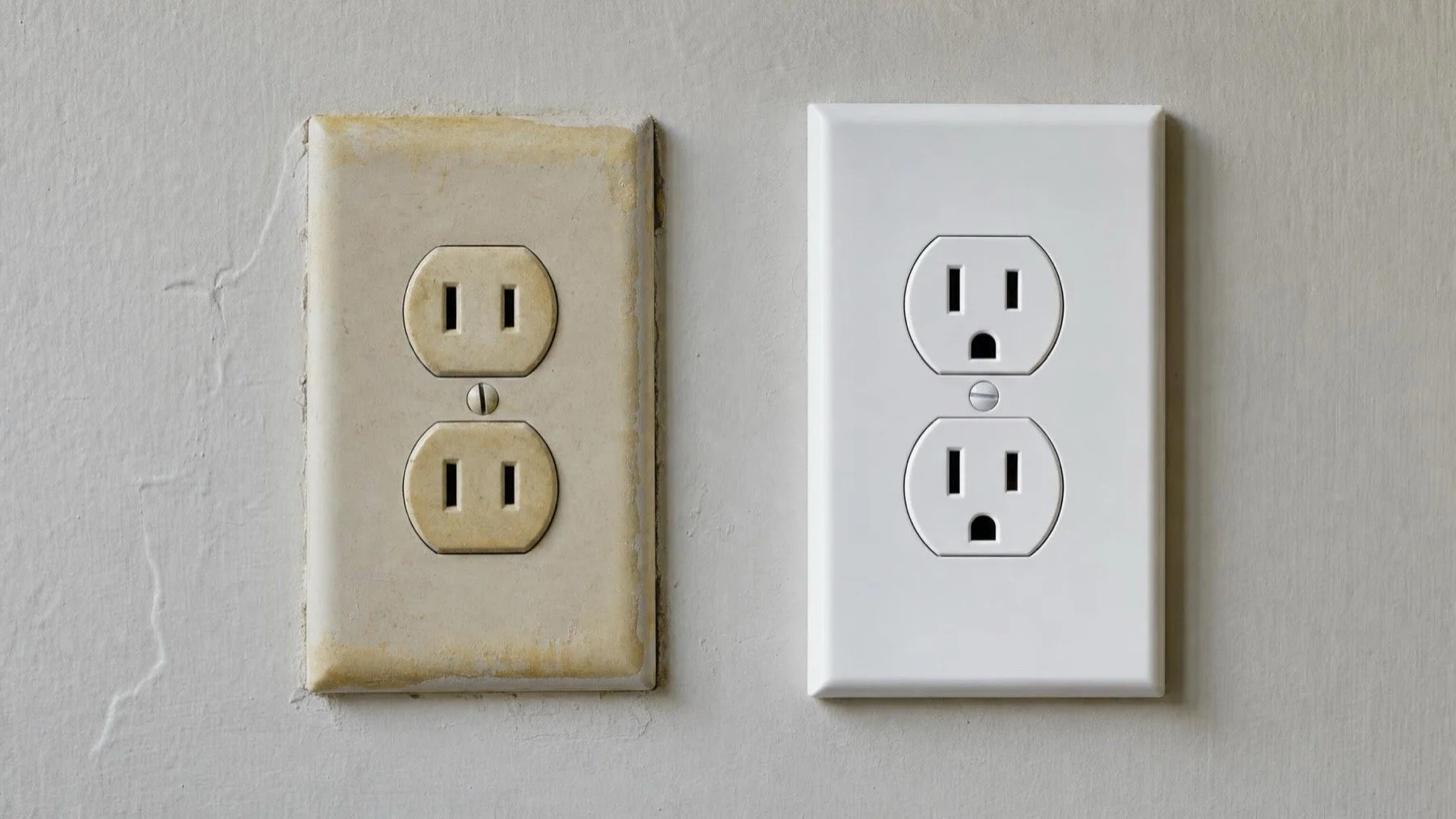
A two slot outlet has no ground connection. That matters most for computers, appliances with metal cases and anything that came with a three prong plug.
If you live in an older home, you have probably met the 2 prong outlet: two slots, no round hole, and a three prong plug that will not fit. The quick fixes people reach for, such as a cheater adapter or a three slot outlet swapped onto the same old wires, make the plug fit without adding the protection the third prong was designed to give.
This article explains what the missing ground means, which upgrade options are safe, and how an electrician decides between them. We replace two slot outlets in older homes across Toronto and the GTA. They often sit alongside other original wiring that shapes the plan.
What the third prong actually does
The round third prong connects the metal parts of an appliance to ground. If a wire inside the appliance comes loose and touches the case, the ground gives that fault current an easy path back to the panel, which trips the breaker instead of leaving the case live. A two slot outlet has no ground path, so that protection is missing for anything plugged into it.
That is also why ESA guidance is to use grounded cords and never remove the grounding pin from the plug. Snapping off the pin or using an adapter makes the plug fit but leaves the appliance without the path it was built to rely on.
Four upgrade options, from simplest to most thorough
| Option | What it does | Usually suits |
|---|---|---|
| Leave it for two prong devices only | No change. Lamps and phone chargers still work normally. | Rooms with light use and no grounded equipment |
| GFCI protection | Adds shock protection. Protected outlets are labelled to show no ground is present. | Kitchens, bathrooms and quick upgrades on sound wiring |
| Add a bonding conductor | Runs a new ground wire to the outlet box | Circuits feeding computers, appliances or surge protectors |
| Rewire the circuit | Replaces old cable with modern grounded cable | Knob and tube, damaged insulation or renovation work |
The GFCI option is popular because it is quick, and ESA has discussed it directly. In an ESA podcast on GFCI and AFCI protection, an ESA speaker explains that when a two prong receptacle is replaced with a three prong one, it generally needs GFCI protection or a bond wire installed. A GFCI protects people from shock, but it does not create a ground, so surge protectors and some electronics still will not have the ground they expect.
ESA guidance also recommends GFCIs in rooms with water, such as bathrooms, kitchens and laundry areas, so older kitchens and bathrooms often get a GFCI upgrade first. Our GFCI outlet installation service in Toronto covers new GFCIs and protection for older ungrounded circuits. If a GFCI you already have keeps cutting out, see our guide to a GFCI outlet that won't reset.
When two slot outlets point to older wiring
Two slot outlets are often original to the house, which means the wiring behind them may be too. In some Toronto neighbourhoods that is knob and tube, which needs its own assessment before anyone changes outlets. Our guide on how to tell if you have knob and tube wiring explains what to look for in the basement and attic. Other warning signs, such as warm cover plates, outlets that no longer grip plugs, or lights that dim when an appliance starts, are covered in signs your older home needs rewiring.
Where the wiring is knob and tube, swapping outlets is rarely the right first step. A knob and tube replacement plan can add grounded circuits room by room, so the outlet question gets answered once.
Who can do the work
Changing an outlet looks simple, which is exactly why it gets done wrong. ESA guidance says hired electrical work in your home must, by law, be done by a Licensed Electrical Contractor. ESA guidance allows homeowners to do their own electrical work in the home they own and live in, provided they file a notification of work with ESA. When we replace two slot outlets, we test each circuit first, confirm what wiring is behind the wall, and explain which option fits before we start.
Electrical questions homeowners ask
What does a 2 prong outlet mean?
A two slot outlet has a hot and a neutral connection but no ground. Devices with two prong plugs work normally, while appliances and electronics designed for a third prong lose the safety path that ground provides.
Outlet vs. Receptacle: What’s the Difference?
Electricians use the word receptacle for the device in the wall, while most homeowners call it an outlet. Both words describe the same thing you plug into.
Safety first next step for older outlets
Make a quick list of the rooms with two slot outlets and note anything you plug in with a three prong cord. Stop using adapters on computers, appliances and power tools. Then book an assessment so we can test the circuits and recommend the simplest safe upgrade for each room.
Book a KoljiBros assessment
We test each two slot circuit, check the wiring behind it and recommend the upgrade that fits, from GFCI protection to new grounded cable.
Kolji Bros. Electrical is a Licensed Electrical Contractor, ECRA/ESA #7015453.