

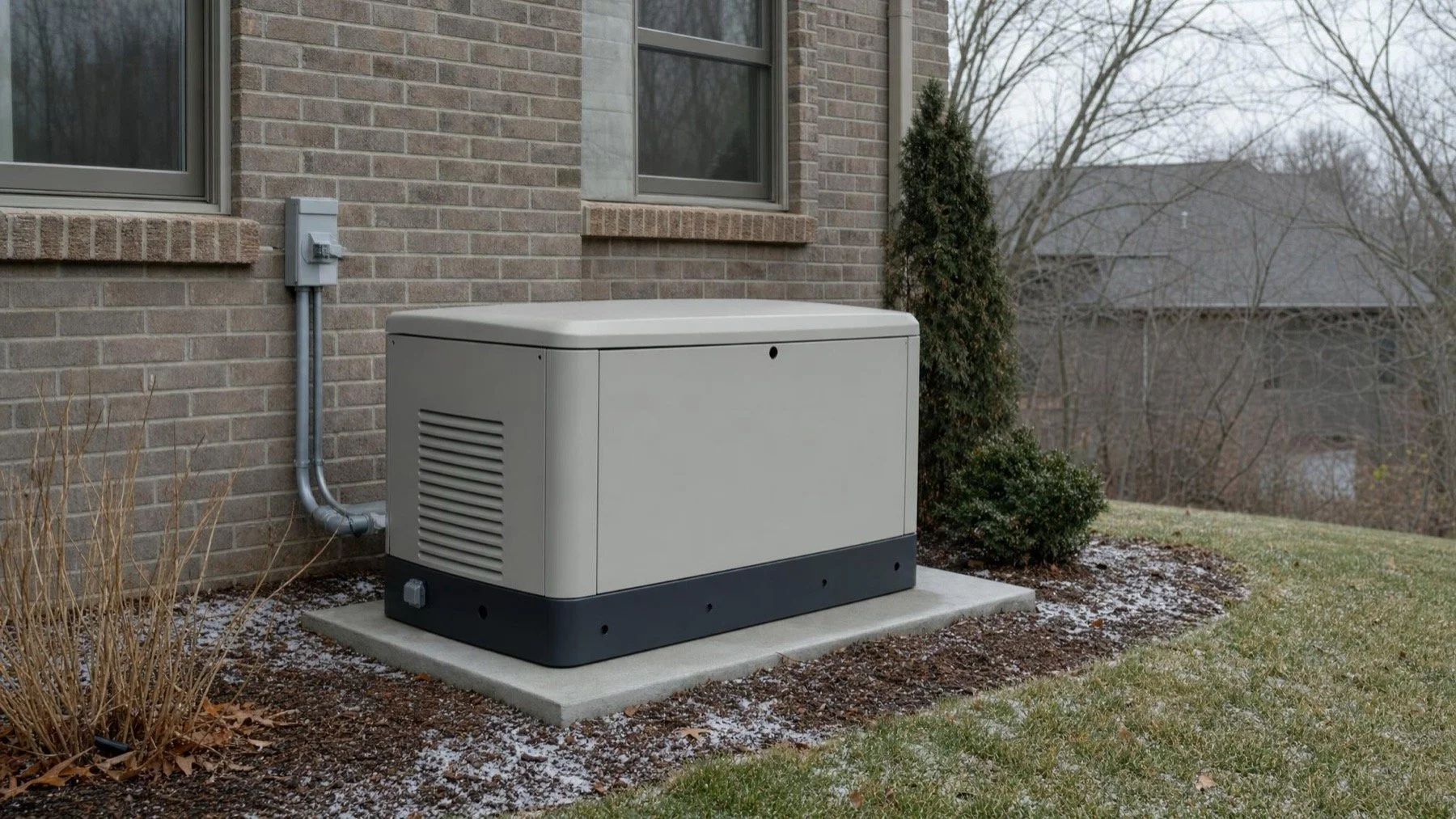
Generator size starts with your outage list, not with the size of the house.
The power goes out on a January night, the furnace stops and the sump pump goes quiet. That is usually when the question comes up: what size generator do I need?
The short answer is a list and a sum. List the loads that must run in an outage, then add their running power plus the largest motor starting surge. Choose a portable unit with an inlet and transfer device, or a standby generator sized from a load calculation and installed with a transfer device.
Getting it wrong costs you either way. A generator that is too small stalls or trips when the furnace and sump pump start together. One that is far larger than you need costs more to buy and run, and it still cannot connect to your home safely without the right transfer equipment.
This guide walks through the decision the way we approach it on a site visit: decide what has to run, work out how those loads start and overlap, then choose between a portable unit and a permanently connected standby generator. ESA guidance for standby generators is to understand your electricity requirements so the unit is the correct size and voltage for your use.
Start with an outage list, not the house size
Square footage tells you very little. A house with gas heat and a gas stove needs far less backup power than the same house heated with electric baseboards. What matters is which loads you want to keep running and whether they run at the same time. Sorting them into three groups makes the conversation with an electrician much faster.
- Must run: furnace blower or boiler controls, sump pump, fridge and freezer, a few lights, and internet and phone charging.
- Nice to run: microwave, a second fridge, the television and some kitchen outlets.
- Can wait: the electric dryer, oven, central air, EV charging, a hot tub and electric baseboard heat. These are large loads that push generator size up quickly.
Most homeowners are surprised by how short the first list is. Planning around it keeps the generator smaller, quieter and cheaper to run, and you can always add circuits from the second list if the numbers allow.
Starting power is where undersized generators fail
Motors draw much more power for a moment when they start than when they run. A sump pump, well pump, furnace blower or fridge compressor can briefly ask for several times its running power. If two of those start together, a generator that looked large enough on paper can stall or trip. That is why sizing works from the running total plus the largest starting surge, not from the running total alone.
For whole home backup, the better tool is a load calculation. An electrician adds up the connected loads in the house, and the same approach tells you whether a generator can carry your essentials or the whole house. If that calculation shows the panel itself is close to its limit, our guide to the signs your panel needs an upgrade explains what to look at next.
Portable or standby: the choice changes the size question
A portable generator usually covers the must run list. It has to sit outdoors, away from windows and doors, and ESA guidance also warns never to run a generator inside your home or garage. Connecting it to your circuits safely means an inlet and transfer equipment installed by an electrician, not an extension cord run through a window or a cord plugged into a wall outlet.
A standby generator is permanently wired, starts automatically and can be sized for essentials or for the whole house. ESA guidance explains that a permanently connected standby generator needs a transfer device, which stops generator power from flowing back into the utility system. That protects your home and the crews working on the lines. ESA guidance adds that connecting a generator permanently to your home requires a notification of work with ESA. Our guide to portable and standby generator costs in Ontario walks through the cost factors.
Who should size and connect it
Sizing and connection are linked. The generator, the transfer equipment, your panel and any gas line all have to work together, and a mismatch in any one of them limits what the generator can actually power. ESA guidance strongly recommends hiring a Licensed Electrical Contractor so the generator is correctly installed. ESA's generator safety page also covers fuel, cords and placement.
The rules on who may do the work are clear. ESA guidance is that anyone you hire for electrical work in your home must, by law, be a Licensed Electrical Contractor. ESA guidance is that homeowners doing their own electrical work in a home they own and live in must file a notification of work with ESA first. ESA's page on notifications and inspections explains how that works. If the transfer equipment goes in during a basement finish, plan that wiring before the walls close. Do not let drywall go up before the required electrical inspection.
We serve homeowners across Toronto and the GTA. On a visit we look at your outage list, your panel and the spot where the generator would sit, then recommend portable or standby and the transfer equipment to match. Our residential electrical service in Toronto and our wider residential electrical services cover the panel and wiring side of backup power.
Electrical questions homeowners ask about generator size
Do I need a transfer switch for a portable generator?
A portable generator should only feed your home's circuits through an inlet and transfer equipment installed by an electrician. Plugging it into a wall outlet can send power back into the utility lines, which puts your home and line crews at risk.
How do I calculate what size generator I need?
Add up the running power of everything you want on at the same time, then add the highest starting surge among the motors. For whole home backup, a load calculation by a licensed electrician gives a more reliable answer.
Safety first next step for backup power
Before you shop, write your must run list and photograph the nameplates on the furnace, sump pump and fridge. Then book a visit so we can check your panel, recommend portable or standby, and plan the transfer equipment with you. Until then, keep any portable generator outdoors and never connect it to a wall outlet.
Book a KoljiBros assessment
Bring your outage list and we will match it to a generator size, your panel and the right transfer equipment, explained in plain English.
Kolji Bros. Electrical is a Licensed Electrical Contractor, ECRA/ESA #7015453.