

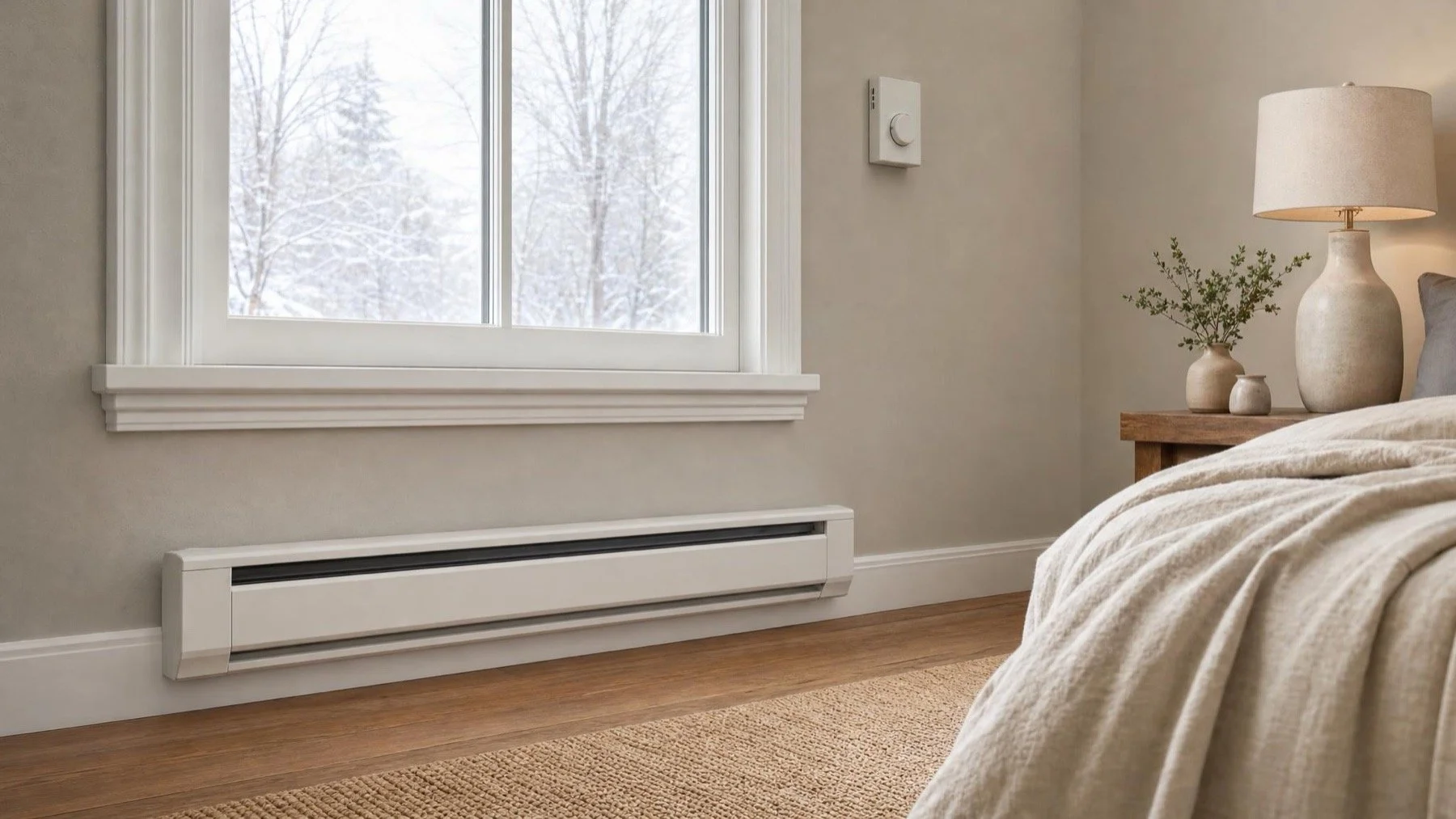
Electric baseboard heaters have very few moving parts, so a cold one usually comes down to the thermostat, the breaker or the wiring that connects them.
The first cold night of November is when a lot of homeowners discover a baseboard heater not working. The thermostat is turned up, the room stays cold, and the heater under the window is barely warm. Before you buy a space heater and move on, it helps to find out why, because the cause can be a simple setting or a wiring problem that needs attention.
Electric baseboard heat is common in basements, additions, older bungalows and homes that were converted to electric heat. Each heater is controlled by a wall thermostat that switches full household power, not a low voltage signal like a furnace thermostat. That simple setup makes troubleshooting fairly orderly. Below are the checks you can do safely, followed by the point where we recommend you stop and call.
First, work out how much has gone cold
Start by working out the size of the problem. If one heater is cold but another on a separate thermostat works, the fault is likely limited to that thermostat, that heater or the wiring between them. If several heaters in the same room are cold, they often share one thermostat and one circuit. If every electric heater in the house is cold, look at the panel first.
Baseboard heaters usually run at a higher voltage than lights and plugs, so they often sit on a double breaker, two handles joined by a bar. A tripped double breaker can leave a whole zone cold while everything else in the house works normally, which is why the panel is worth checking even when the lights are fine.
Five checks, in a safe order
- Thermostat setting. Turn the thermostat to its highest setting. Older dial thermostats often click when they call for heat. If you hear nothing and feel no warmth after several minutes, note it. A thermostat with a cracked case or scorch marks is a reason to call, not to fiddle.
- Breaker. Open the panel door and look for a breaker sitting between on and off. Push it firmly off, then on, once. If it trips again, leave it off. A heating circuit that trips repeatedly can point to a short, a failing element or a loose connection.
- Airflow and clutter. Baseboard heaters warm the air that moves across them. A couch pushed tight against the heater, long curtains or stored boxes can block that airflow, and many heaters have a high temperature cutout that shuts them off when they overheat. Clear the space in front of the heater and test again.
- Look, smell and listen. With the thermostat turned down, look along the heater for bent fins, heavy dust, scorch marks or melted plastic near the ends. A burning smell, crackling or a heater that only warms at one end are all reasons to stop using it.
- A new smart thermostat. If the wall thermostat was recently replaced with a smart model, confirm it is rated for electric baseboard heat. Many smart thermostats are made for low voltage furnace systems. ESA guidance notes that connected thermostats may need a specific voltage and additional wiring to install.
If a check means taking a thermostat off the wall or opening the end cover of the heater, it has stopped being a check. Both expose wiring that carries full household voltage.
Using a space heater while you wait
A portable heater can keep a room usable until the repair is done. ESA guidance is to plug space heaters directly into a wall outlet rather than an extension cord or power bar. Keep it well clear of beds, curtains and paper, switch it off when you leave the room, and avoid running it on a circuit that already feeds a kettle, microwave or other large load. ESA's indoor safety tips cover placement in more detail.
If the same room needs extra heat every winter, a portable heater on a long cord is not the answer. For power you need every winter, ESA guidance points to a Licensed Electrical Contractor installing permanent wiring and outlets.
What we test when a heater stays cold
We handle heating circuit calls for homeowners across Toronto and the Greater Toronto Area. On those visits we check for power at the thermostat and at the heater, test the element, and look for heat damage at every connection, including any junction box along the way. The fix might be a new thermostat, a new heater or a repair to one loose connection. We provide a clear diagnosis and quote before any repair work begins, so you can decide whether to repair or replace.
If you hire someone for this work, ESA guidance says it must by law be a Licensed Electrical Contractor. A homeowner can legally do electrical work in a home they own and live in, but ESA guidance requires a notification of work first. Heating circuits are part of our residential electrical service in Toronto, and a heating breaker that will not stay on is covered in our guide to breakers that keep tripping.
Electrical questions homeowners ask
Why is my baseboard heater not working in just one room?
When only one room is cold, the cause is usually that room's thermostat, the heater itself or the wiring between them. Check the thermostat setting and the breaker, clear anything blocking the heater, and call an electrician if it still stays cold.
How to reset baseboard heater?
Most baseboard heaters reset when power is restored at the breaker or when the thermostat is turned down and back up. Some have a high temperature cutout that resets once the heater cools, and a heater that keeps cutting out needs testing rather than repeated resets.
Do electric baseboard heaters wear out?
Electric baseboard heaters can last many years, but elements, thermostats and connections wear over time. Bent fins, scorch marks, uneven heat or a burning smell are signs the heater or its wiring needs attention.
Safety first next step when the heat stops
Run the checks above in order, reset a tripped breaker once at most, and stop if you smell burning, see scorch marks or the breaker trips again. Note which heaters are cold and what the thermostat does, then book a visit. If the house is losing heat overnight in a deep freeze, call our after hours electricians rather than waiting.
Book a KoljiBros assessment
We trace the cold heater back to the thermostat, breaker or wiring and explain the options before any repair. After hours, weekend and holiday calls are billed at our emergency rate, quoted upfront before any work begins.
Kolji Bros. Electrical is a Licensed Electrical Contractor, ECRA/ESA #7015453.