

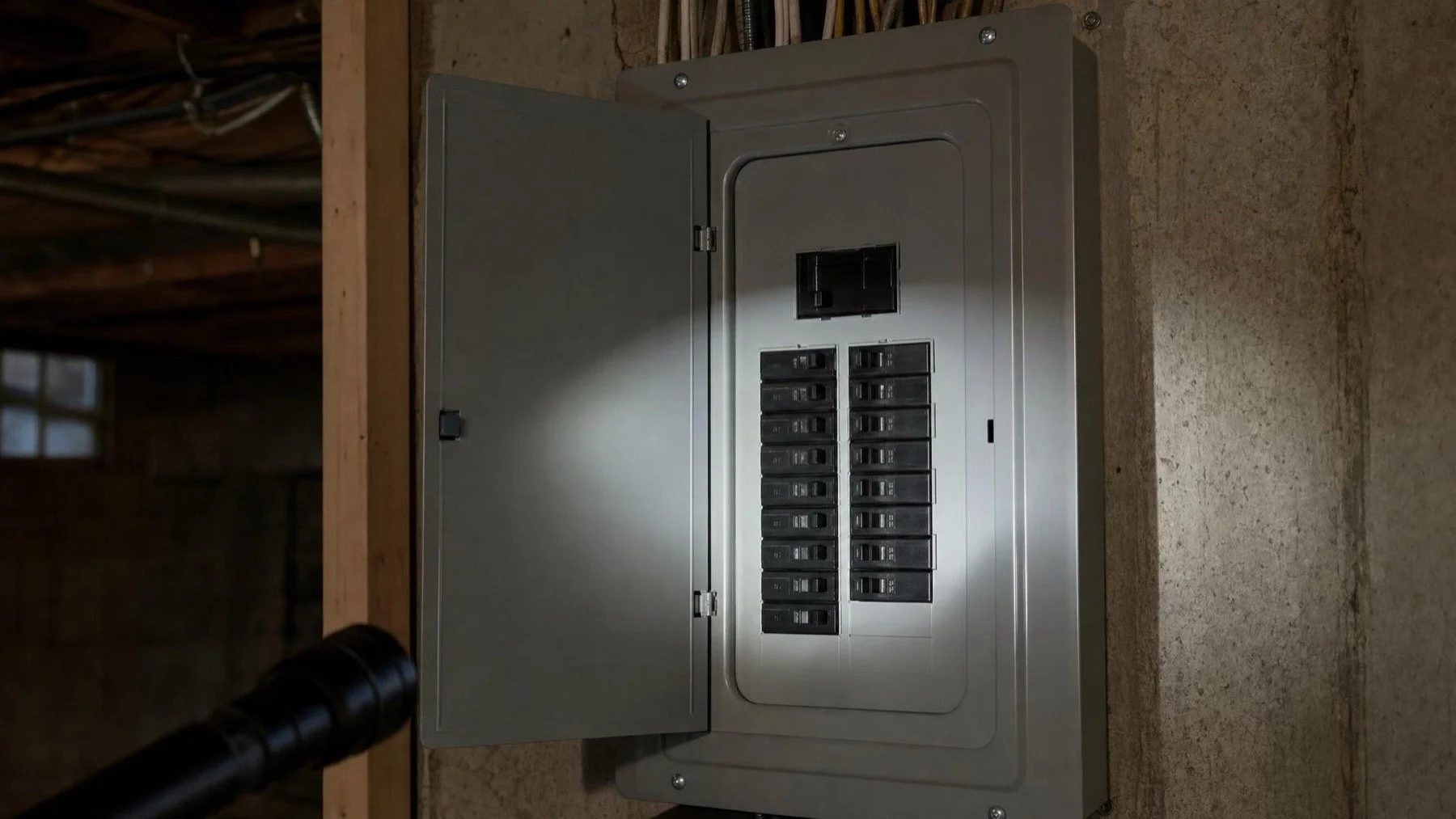
A soft, steady hum from a breaker panel is often harmless. Crackling, sizzling, a warm door or a burning smell are the sounds and signs that mean stop and call.
You go downstairs to switch the laundry and hear it: a low hum, or something sharper, coming from the grey metal box on the wall. Electrical panel buzzing is easy to ignore until it gets louder. Some panel noise is normal. Some of it points to a loose connection or a breaker that is struggling, and those problems tend to get worse with time rather than fix themselves.
This guide helps you tell a normal hum from a warning sound, shows what you can check without opening anything, and explains when to call a licensed electrician. We take these calls from homeowners across Toronto and the GTA, and we start by testing rather than guessing.
A steady hum and a crackle are different problems
Breakers and the metal parts around them can make a faint, even hum when circuits are carrying power. In many homes you only notice it at night when the house is quiet. A hum that stays soft and steady, with no heat, smell or flickering lights, is often not urgent, although it is still worth mentioning at your next service visit.
The sounds that matter are the ones that change. A buzz that grows louder when the dryer or a space heater starts, a crackle that comes and goes, or a sizzle near one breaker can point to a loose connection, a worn breaker or a circuit carrying more than it should. A loose connection heats up under load, and that heat damages insulation and the breaker itself. That is why a changing sound deserves attention even when the lights still work.
| What you hear or notice | What it can point to | What to do |
|---|---|---|
| Faint, steady hum with no heat or smell | Normal operating noise in many panels | Note it and mention it at your next service visit |
| Buzz that gets louder when a large appliance starts | A breaker or connection struggling under load | Limit use of that appliance and book an assessment |
| Crackling or sizzling that comes and goes | Arcing at a loose connection or a damaged breaker | Stop using the affected circuits and call promptly |
| Any sound with heat, a burning smell or scorch marks | Overheating inside the panel | Keep clear and call right away. Call 911 if you see smoke or flames. |
What you can check without opening anything
Everything here happens with only the outer panel door open, never with the inner cover removed. Stand on a dry floor, keep your hands dry and use a flashlight rather than a candle.
- Find the sound. Stand a step back and listen. Is it coming from one area of the breakers, the main breaker at the top, or the meter outside?
- Watch what changes it. Turn off a large appliance such as the dryer, a space heater or the oven at the appliance itself, then listen again. If the sound drops, write down which appliance was running.
- Check for heat. A panel door that feels warm is a reason to call, not a reason to keep investigating.
- Look for a tripped breaker. A handle sitting between on and off has tripped. Our guide to why a breaker keeps tripping explains the usual causes, and a breaker that trips again after one reset should be left off.
- Use your nose. A hot plastic smell near the panel is a stop sign. Our article on an electrical burning smell covers what to do next.
Write down what you found: where the sound comes from, when it happens and what makes it louder. Those notes shorten the visit when an electrician tests the panel.
Why a noisy breaker is not a weekend repair
It is tempting to tighten a screw or swap a breaker yourself, especially when the noise seems to come from one spot. The parts that hum or crackle sit close to the main connections from the street, and those can stay energized even with the main breaker switched off. Finding the cause usually means testing under load, checking connection temperatures and looking at the breaker and the bus bar it clips onto. A replacement breaker also has to be the correct type for that panel.
There is a legal side too. ESA guidance is that anyone you hire for electrical work in your home must, by law, be a Licensed Electrical Contractor. Homeowners may do their own electrical work in a home they own and live in, but ESA guidance says they must file a notification of work with ESA first. For anything inside a panel, we recommend professional installation. ESA guidance also suggests checking for the licence number on the electrician's truck, business card and estimate. You can read ESA's own advice on how to hire a licensed contractor.
We check panels as part of electrical troubleshooting in Toronto. Our troubleshooting page lists strange sounds from panels, outlets or fixtures as a sign of loose connections or failing components that need prompt repair. If testing shows the panel itself is worn out or full, a breaker or panel replacement may be the right fix. Often it is not. A loose connection or a single failing breaker can usually be repaired without replacing the whole panel, and we tell you which situation you are in before any work starts.
Electrical questions homeowners ask
Why is my electrical panel making a buzzing noise?
A faint, steady hum can come from normal current flowing through breakers and other parts. A louder buzz, crackle or sizzle more often points to a loose connection, a worn breaker or an overloaded circuit, and those need testing by a licensed electrician.
What does a blown breaker sound like?
Breakers do not blow like fuses, but a failing breaker can buzz, crackle or click. It may also feel warm or trip often, so leave a noisy breaker off and have it tested.
What are the signs of a faulty electrical panel?
Common warning signs include buzzing or crackling, a warm panel door, a burning smell and scorch marks. Breakers that trip often and lights that flicker when appliances start are also reasons to book an assessment rather than wait.
Safety first next step for a noisy panel
Keep heavy appliances off any circuit that seems to make the sound worse, note what you hear and when, and book a visit. When electrical panel buzzing comes with heat, a burning smell or constant crackling, treat it as urgent: keep people away from the panel and call our after hours electricians. If you see smoke or flames, leave the house and call 911.
Book a KoljiBros assessment
We test the panel under load, find the source of the sound and explain the repair in plain English before any work begins. After hours, weekend and holiday calls are billed at our emergency rate, quoted upfront before any work begins.
Kolji Bros. Electrical is a Licensed Electrical Contractor, ECRA/ESA #7015453.