

How to Tell If Your Home Has Knob and Tube Wiring
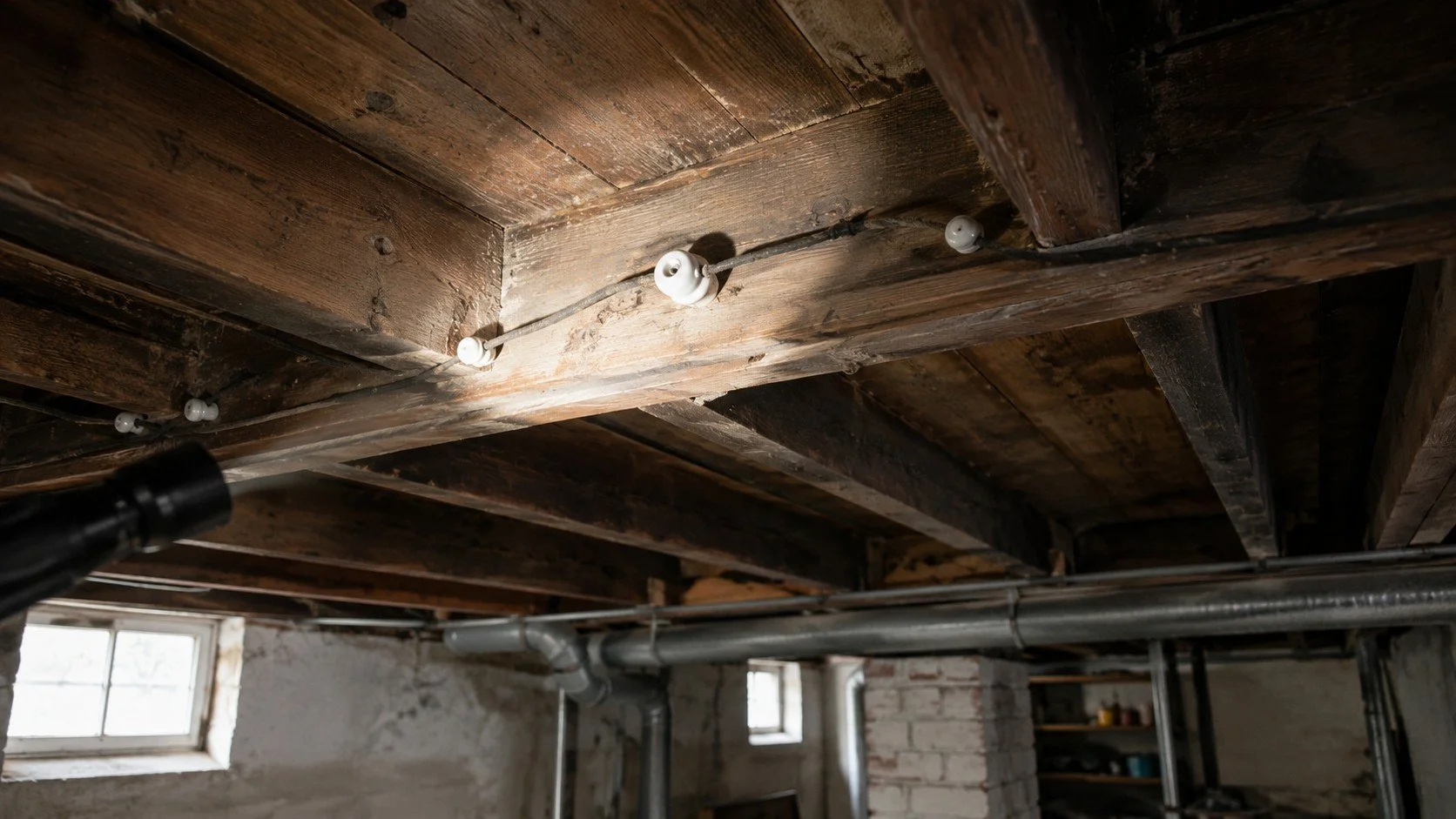
Older Toronto neighbourhoods are full of character homes, and many of them were wired long before modern standards existed. Knob and tube wiring was the norm before the 1950s, and some of it is still in service today. If you have just bought an older home, or you are planning a renovation, knowing how to spot knob and tube is the first step toward a safe, insurable house.
What you are looking for
Knob and tube wiring has a distinct look once you know it. Watch for these signs:
- White ceramic knobs anchoring wires to the framing.
- Ceramic tubes where wires pass through joists or studs.
- Two separate single wires running a short distance apart, rather than one modern cable.
- Cloth or rubber covered wires instead of modern plastic sheathing.
- No ground wire at outlets, and two prong receptacles throughout.
For the safety background on why this matters, see our guide on knob and tube wiring risks and when to replace it.
Where to look in the home
Knob and tube is easiest to spot in the unfinished parts of the house where wiring is exposed.
The basement and attic
Look along the basement ceiling joists and in the attic. These are the most common places to see the ceramic knobs and tubes still in place. Bring a flashlight and check where wires cross the framing.
Outlets and the panel area
Two prong outlets throughout the home are a strong hint that the original wiring had no ground. Near the panel, older cloth covered wires can also point to knob and tube somewhere in the system. If your panel is also a fuse box, the home is even more likely to have old wiring. Our note on fuse box replacement explains that side.
Why a visual check is not enough
You might see knob and tube in the basement and assume the rest of the house is fine, or see none and assume you are clear. Both can be wrong. Previous owners often replaced wiring in some rooms and left it in others, and a lot of knob and tube hides inside finished walls. The only reliable answer comes from a licensed electrician who can trace the circuits and tell you how much active knob and tube remains.
What to do if you find it
Finding knob and tube is not a reason to panic, but it is a reason to plan. Active knob and tube affects both safety and insurance, and it usually pairs with a panel upgrade when it is replaced. A licensed Electrical Contractor inspects the home and gives you a written quote. Kolji Bros Electrical handles knob and tube replacement across Toronto and the GTA, and you can see the full scope on our residential electrical services page.
Frequently asked questions
What does knob and tube wiring look like?
Look for white ceramic knobs and tubes holding single wires across the framing, often with cloth or rubber insulation. Two prong outlets throughout the home are another common sign.
Where is knob and tube wiring usually found?
It is most visible in unfinished basements and attics along the joists, but a lot of it hides inside finished walls, which is why a full inspection matters.
Can I check for knob and tube myself?
You can look for the obvious signs in the basement and attic, but a visual check often misses wiring inside walls. A licensed electrician can confirm how much active knob and tube remains.
Does all knob and tube wiring need to be replaced?
Active knob and tube is widely treated as a hazard and usually should be replaced, especially for safety and insurance. An electrician can tell you what your home specifically needs.
Do two prong outlets mean I have knob and tube?
Not always, but they suggest ungrounded original wiring, which often goes with knob and tube. It is worth having the system inspected to be sure.
Think your older home might have knob and tube? Kolji Bros Electrical inspects the wiring, tells you how much remains, and gives you a clear written quote for replacement. Serving Toronto and the surrounding GTA.
Book an inspection