

Knob and Tube Wiring: Risks and When to Replace It
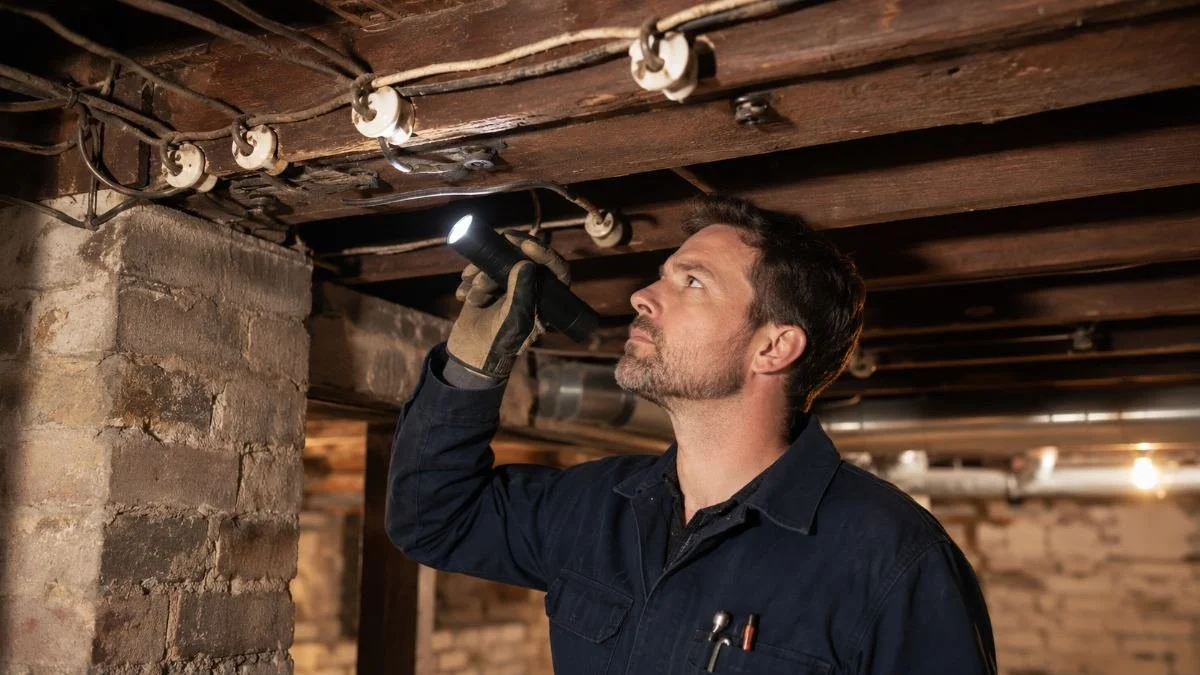
You bought a charming older home in the GTA, and an inspector mentions knob and tube wiring. Now you have questions. Is it safe? Do you have to replace it? Will it affect your insurance?
Knob and tube wiring is not automatically dangerous, but it carries real risks in a modern home. This guide explains what it is, why it matters, and how to decide on replacement.
What Knob and Tube Wiring Is
Knob and tube was the standard wiring method in North American homes from roughly the 1900s to the 1940s. You can spot it in an attic or basement as single cloth covered wires held away from the wood by white ceramic knobs, passing through joists inside ceramic tubes. It has no ground wire, which is the first sign it predates modern safety standards.
Why It Was Used
For its time it worked well. The wires ran through open air, which helped them shed heat. The problem is not the original design. The problem is a century of modern demands and modifications layered on top of it.
The Risks in a Modern Home
Knob and tube becomes a hazard for a few clear reasons.
No Ground Wire
Without a ground, the system offers less protection against shock and fault. Modern appliances and electronics expect a grounded connection, and many three prong devices cannot be used safely.
Aged and Brittle Insulation
The cloth and rubber insulation dries out and cracks after decades. Exposed conductors can arc or short, and that creates heat. If you ever notice a burning smell, read our guide on an electrical burning smell.
Buried Insulation
Knob and tube was designed to release heat into open air. When later owners blow insulation into walls and attics, they trap that heat around the wires. That is one of the most common and dangerous modifications.
Unsafe Modifications
Decades of DIY splices and extensions often leave knob and tube spliced into modern wiring with poor connections. Each bad splice is a potential hot spot.
Knob and Tube and Your Insurance
Many Canadian insurers will not write or renew a policy on a home with active knob and tube, or they charge more and require an inspection. Buyers face the same hurdle. If you are buying or selling an older GTA home, knob and tube can stall the deal until it is addressed. A licensed electrician can assess how much is still active and document it.
Should You Replace It?
In most cases, yes. Replacement removes the risk, satisfies insurers, and brings the home to modern standards with grounded circuits. You do not always have to do it all at once. An electrician can prioritize active circuits and high risk areas first, then phase the rest.
The safety case is strong. The Electrical Safety Authority links 143 electrical related fatalities in Ontario between 2015 and 2024, and its 2024 Ontario Electrical Safety Report found that electrical fatalities outside of work rose 40 percent over the past decade.
Patience Cathcart, the ESA Public Safety Officer, said the findings show why safety has to reach beyond job sites, and that the agency stays focused on "educating the public, guiding industry."
Older homes with knob and tube often have an old fuse panel too. If yours does, our fuse box replacement service pairs naturally with a rewire. The full job runs through our residential electrical services.
Why You Need a Licensed Electrician
Rewiring a home is major electrical work. In Ontario, the ESA states that a Licensed Electrical Contractor is the only business you can legally hire for it, and the work needs a permit and inspection. Unlicensed work can also void your insurance, which defeats the purpose.
Knob and Tube FAQ
Is knob and tube wiring safe?
It can be in good condition and left undisturbed, but aged insulation, no ground, buried insulation, and old modifications make it a risk in most modern homes. An inspection tells you its real state.
Do I have to replace knob and tube wiring?
Not always by law, but insurers often require it, and replacement is usually the safest choice. An electrician can phase the work, starting with active and high risk circuits.
Will insurance cover a home with knob and tube?
Many insurers decline, surcharge, or require an inspection for active knob and tube. Replacing it usually resolves the coverage problem.
How much does it cost to replace knob and tube?
Cost depends on the home size, how much is still active, and access. A licensed electrician assesses the home and quotes it in writing.
Can I cover knob and tube wiring with insulation?
No. Knob and tube needs open air to shed heat. Burying it in insulation traps heat and is a known fire risk.
The Bottom Line
Knob and tube wiring is a sign of a home's age, not an instant emergency, but it carries real risks once insulation, modern loads, and old splices enter the picture. In most cases replacement is the safe call, and it clears insurance hurdles too. Get a licensed electrician to assess what is active and plan the work.
Have knob and tube in your home?
Kolji Bros. Electrical assesses older GTA homes and plans safe, phased rewiring. Call 1 866 565 5427 or book an inspection online.