

Signs Your Older Home Needs Rewiring
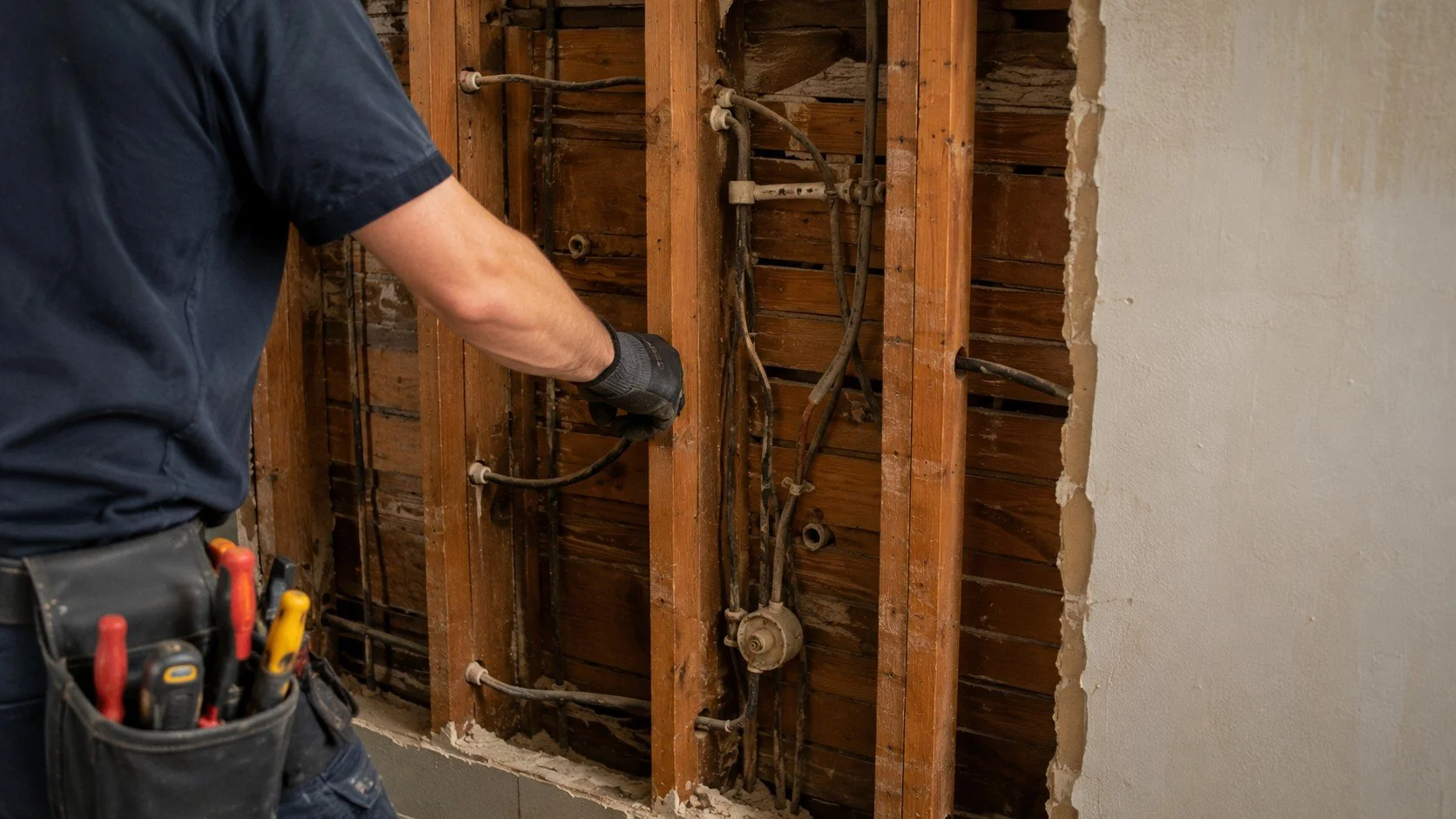
Wiring does not last forever. In older Ontario homes, the original system was built for a much lighter electrical life than we lead today. Over the decades, insulation breaks down, connections loosen, and circuits get overloaded. The home usually tells you when the wiring is struggling. The trick is knowing which signs to take seriously.
Warning signs you can see and feel
Some signs are easy to notice if you know what they mean:
- Lights that flicker or dim when appliances turn on.
- Breakers that trip often, or fuses that blow regularly.
- Outlets or switch plates that feel warm or look discoloured.
- A faint burning smell near outlets or the panel.
- Outlets that have stopped working for no clear reason.
A burning smell or hot outlet is urgent. Stop using that circuit and call a licensed electrician.
Signs hidden in the home's age and setup
Other signs come from how the home was built rather than what you can feel day to day.
Old wiring types
If your home still has knob and tube or aluminum wiring, rewiring is often on the horizon. Both were used in older homes and both come with known concerns that a licensed electrician should assess.
Too few outlets and two prong receptacles
Relying on power bars in every room and seeing two prong outlets throughout usually means the wiring is original and ungrounded. That points to a system that was never designed for modern demand.
Why these signs matter
Failing wiring is not just an inconvenience. Loose connections and degraded insulation are a real fire risk, which is why the Electrical Safety Authority stresses keeping home wiring in good condition. (Attribute the safety framing to the ESA at esasafe.com; keep any specific figure general and verify against the latest ESA report at build time.) Catching the signs early lets you plan the work instead of reacting to a failure.
What to do next
One sign on its own may be a small fix. Several together suggest the wiring deserves a full look. A licensed Electrical Contractor inspects the system, tells you whether you need spot repairs or a fuller rewire, and gives you a written quote. If a rewire is needed, our whole house rewiring cost page explains the factors, and you can see the full scope of our residential electrical services.
Frequently asked questions
How do I know if my house needs rewiring?
Watch for flickering lights, frequent breaker trips, warm or discoloured outlets, burning smells, and old wiring types like knob and tube or aluminum. Several signs together call for an inspection.
Is flickering lights a sign of bad wiring?
It can be. Occasional flicker from one bulb is usually minor, but lights that dim across the home when appliances start can point to overloaded or failing wiring.
Does my whole house need rewiring, or just part of it?
It depends on the home. Some need only targeted repairs, others need a full rewire. A licensed electrician inspects the system and tells you what your home actually requires.
Is old wiring a fire risk?
Degraded insulation and loose connections raise the risk of overheating, which is why the ESA emphasizes keeping wiring in good condition. An inspection identifies the trouble spots.
What should I do if I smell burning near an outlet?
Treat it as urgent. Stop using that circuit, avoid plugging anything else in, and call a licensed electrician right away.
Seeing the warning signs in your older home? Kolji Bros Electrical inspects your wiring, tells you whether you need repairs or a rewire, and gives you a clear written quote. Serving Toronto and the surrounding GTA.
Request a free assessment