

GFCI Outlet Won’t Reset? Safe Checks and Next Steps
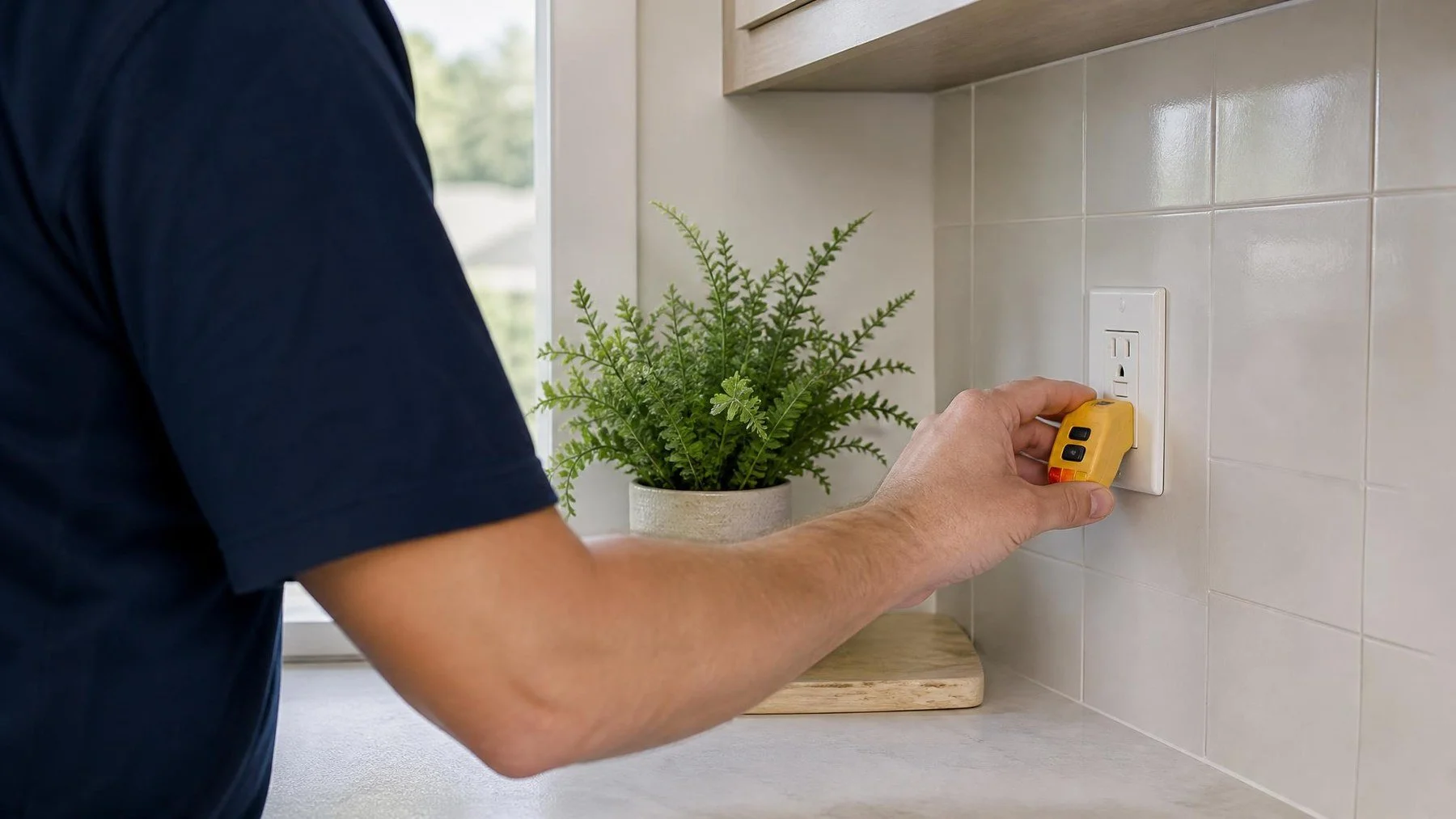
A GFCI that refuses to reset is doing part of its job. It is holding the power off until someone finds out why.
You press RESET on the bathroom or kitchen outlet and nothing happens. The button will not stay in, or it clicks and the outlet stays dead. A hair dryer or toaster that worked yesterday now does nothing.
A ground fault circuit interrupter, or GFCI, is the outlet with the TEST and RESET buttons. When one will not reset, the cause is usually one of a few things: the device has no power coming in, something on the circuit is still leaking current, moisture has reached the device or the outlets it protects, or the GFCI itself has failed. You can narrow it down safely from the outside. The fix, once you get past those outside checks, belongs to a licensed electrician.
We troubleshoot GFCI problems in homes across Toronto and the GTA, and the same question comes up often: is it safe to keep pressing the button? This guide explains what the lockout means, gives you one short check sequence that does not involve opening anything, and shows where to stop.
What a Locked GFCI Is Telling You
A GFCI watches the current going out to a device and the current coming back. When the two do not match, some current is escaping by another path, which could be through water or a person. The GFCI cuts the power in a fraction of a second. ESA recommends GFCIs in rooms with water, like bathrooms, kitchens and laundry, because water and electricity together raise the risk of a shock.
Most modern GFCIs are also designed to refuse a reset under certain conditions. Leviton, one of the larger GFCI manufacturers, calls this reset lockout. The device stays off when it is not receiving power, when it still detects an imbalance in the current, when it has been wired with its incoming and outgoing connections reversed, or when it has been damaged, worn out or exposed to moisture. In other words, a GFCI that will not reset is often working as designed. Treat the lockout as information rather than an obstacle to push past.
That matters because the tempting response is to keep pressing RESET, or to move the appliance to an extension cord from another room. Neither tells you anything about the cause, and the second one routes power around the protection the GFCI was put there to give.
Four Common Reasons a GFCI Will Not Reset
Each of these is a possibility, not a diagnosis. Several can look identical from the outside, which is why the final answer comes from testing.
No Power Is Reaching the GFCI
A GFCI needs power on its incoming side before it can latch. If the breaker feeding it has tripped, or a connection upstream has come loose, the RESET button has nothing to work with. The Circuit Detective, a long running homeowner troubleshooting guide, notes that newer GFCIs will not catch if they are not receiving power or are hooked up incorrectly. A breaker that has tripped is a separate signal worth taking seriously, and our guide on why a breaker keeps tripping explains what that can mean.
Something Connected Is Still Leaking Current
If an appliance plugged into the GFCI, or into an outlet the GFCI protects, has an internal fault, the GFCI senses the leak again the moment you try to reset it. Older appliances with heating elements, outdoor tools, and cords that have been pinched or crushed are common suspects. The same is true of damaged wiring further along the circuit. Unplugging every connected load is the quickest safe way to separate an appliance problem from a wiring or device problem.
Moisture Has Reached the Device or the Circuit
Bathrooms after a long shower, outdoor outlets after rain or snowmelt, and basement or garage outlets in damp seasons all give moisture a route in. Water inside a receptacle box or an outdoor cover can create the very leakage the GFCI is built to catch. If you can see water, condensation or frost at the outlet, do not try to dry it out and do not keep resetting it. That is a stop point.
The GFCI or Its Wiring Has a Problem
GFCIs do not last forever, and a device that has been through moisture, surges or years of use can fail internally. A GFCI that was recently installed or replaced may also have been connected incorrectly, which can prevent it from resetting at all. Neither condition can be confirmed by looking at the outlet, and replacing a receptacle is not a homeowner task. A failed device is one possible finding, not the default assumption.
A Safe Check Sequence for Homeowners
The steps below involve only buttons, plugs and your eyes. They do not involve removing a cover plate, opening the panel cover, or touching anything inside a box. Work through them once, in order.
- Unplug everything. Remove every cord from the GFCI and from the other outlets in the same room, including items that stay plugged in, like a garage freezer or a bathroom heater.
- Look for water. Check the outlet, the area around it and any outdoor cover. If anything is wet, stop here.
- Press RESET firmly, once. A partial press can fail to latch. If it holds, plug items back in one at a time and note which one trips it.
- Check the panel from the outside. Look for a breaker handle sitting in the middle or off position. If one has tripped and nothing smells hot or looks damaged, you can switch it fully off and then back on once. If it trips again, leave it off.
- Look for another GFCI. One GFCI often protects several ordinary looking outlets after it. Check bathrooms, the kitchen, the garage, the laundry area, outdoor outlets, and rarely used spots like a powder room or closet. Our guide on why outlets stop working covers other causes of dead outlets.
- Write down what you see. Note which outlets are dead, whether the GFCI has an indicator light and its colour, and what you unplugged. That record shortens the diagnosis.
Once the GFCI resets, test it. Press TEST and the power should cut off, then press RESET to restore it. The Electrical Safety Foundation International suggests testing GFCIs monthly this way. If TEST does not cut the power, the outlet should not be relied on until an electrician has checked it.
When to Stop and Call
This is the decision point. If the GFCI still will not reset with every connected load unplugged and no tripped breaker, the cause is in the device, the wiring or the supply, and the next step is a proper test of the circuit. Leviton's own guidance reaches the same point: if the GFCI still will not reset after those checks, it may be time to call a licensed electrician.
Call sooner, and leave the circuit off, if you notice any of the following:
- Water, frost or condensation in or around the outlet or its cover.
- A burning smell, discolouration, melting or heat at the outlet, plate or panel.
- A breaker that trips again as soon as you reset it.
- A GFCI that trips again with nothing plugged into it.
- Buzzing, crackling or sparking from the outlet.
- A tingle or shock from an appliance, tap or fixture in the room.
- Several outlets dead with no GFCI or breaker you can find to explain it.
What an Electrician Checks
A licensed electrician confirms whether power is reaching the GFCI, checks the device and its connections, traces which outlets it protects, and looks for the leakage point on the circuit. That leakage can sit in an appliance, a damp outdoor box, a damaged cable or the GFCI itself. The repair follows from what the testing finds. It may be drying out and sealing an outdoor location, correcting a connection, replacing the receptacle, or repairing a section of wiring.
Our electrical troubleshooting service covers GFCI outlets that will not reset, nuisance tripping and ground fault problems. If the device needs replacing, or a room needs protection it does not have, our GFCI outlet installation page explains that work.
Who Can Do the Work in Ontario
ESA states that if you hire someone to do electrical work in your home, by law that person must be a Licensed Electrical Contractor. Homeowners may do their own electrical work in a home they own and live in, but must file a notification of work with ESA. For a GFCI that will not reset, the cause is unknown until the circuit is tested, so professional diagnosis is recommended.
Before you book anyone, check the licence with ESA. ESA says a Licensed Electrical Contractor has a 7 digit ECRA/ESA licence number that should appear on the work vehicle and the estimate, and you can confirm it with ESA's Find a Contractor tool.
What Shapes the Cost in Toronto
The cost of fixing a GFCI that will not reset depends on what the testing finds, how many outlets the device protects, whether the location is indoors or outdoors, whether wiring needs repair, and access to the circuit. Contact Kolji Bros. Electrical for an assessment and a written quote.
Electrical questions homeowners ask
What is a GFCI outlet?
A GFCI is a receptacle with TEST and RESET buttons that cuts the power when it senses current escaping by another path. ESA recommends GFCIs in rooms with water, like bathrooms, kitchens and laundry.
The Bottom Line on a GFCI That Will Not Reset
A GFCI that refuses to reset is holding the power off for a reason. Unplug everything, look for water, press RESET firmly once, check the panel and other GFCIs from the outside, and write down what you find. If the outlet still will not reset with nothing connected, leave it off and have the circuit tested by a licensed electrician.
GFCI outlet still won't reset?
Kolji Bros. Electrical tests the circuit, finds the cause, and explains the repair in plain language before any work begins. We serve homeowners across Toronto and the GTA.
Kolji Bros. Electrical is a Licensed Electrical Contractor, ECRA/ESA #7015453.