

Knob and Tube Wiring and Your Home Insurance
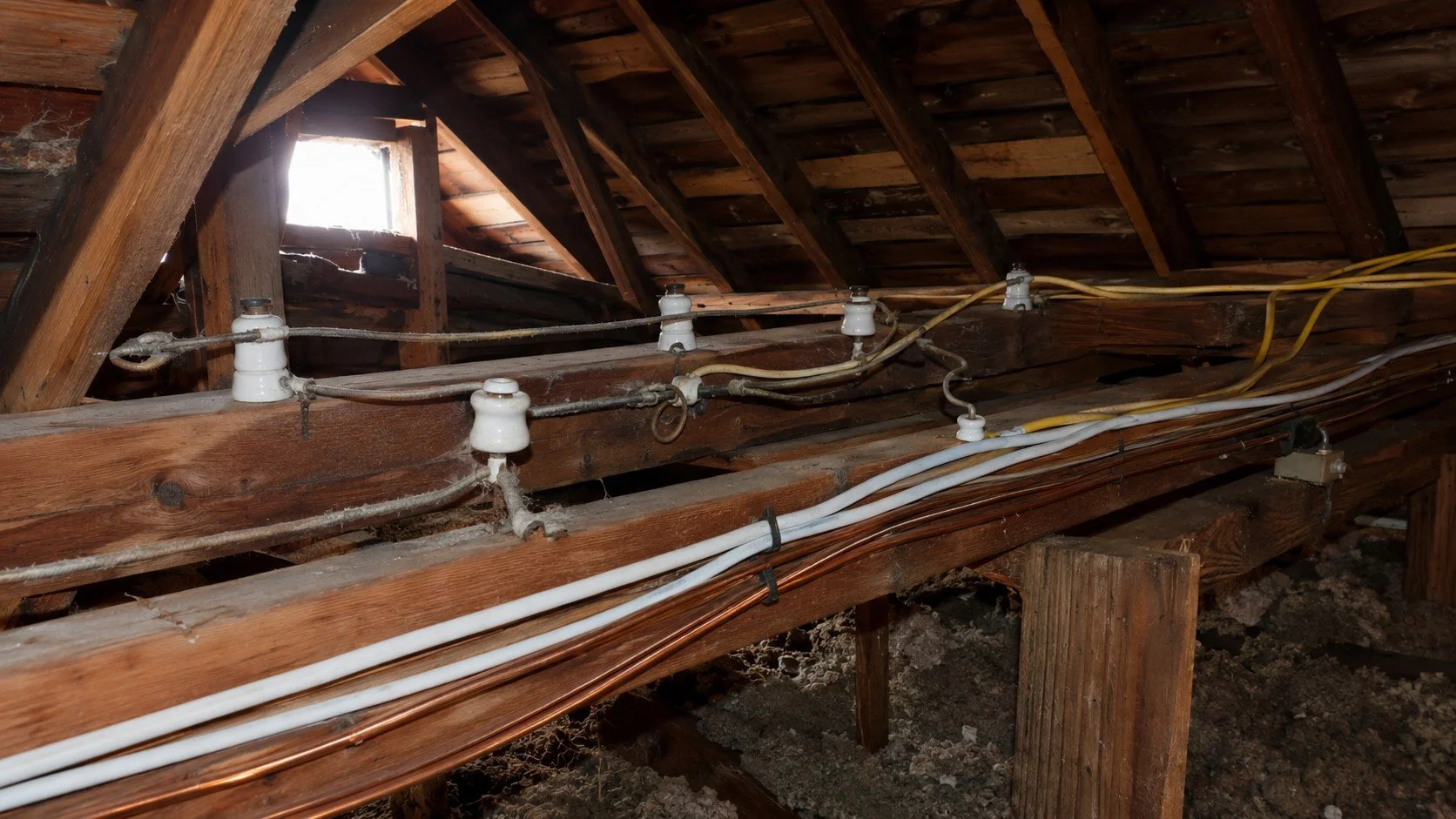
If you own an older home in Toronto or the GTA, there is a fair chance it once had, or still has, knob and tube wiring. It was standard in homes built before the 1950s. The wiring question that catches most owners off guard is not safety alone. It is insurance. Many Ontario insurers treat active knob and tube wiring as a risk, and that can affect whether you are covered and what you pay.
What knob and tube wiring is
Knob and tube wiring uses ceramic knobs to hold wires in place and ceramic tubes to pass them through joists. It has two main weaknesses for a modern home. There is no ground wire, and the original insulation grows brittle with age. To understand the safety side in detail, read our guide on knob and tube wiring risks and when to replace it.
Why insurers care about it
According to the Electrical Safety Authority, knob and tube wiring is widely treated as a higher fire risk, and many insurers respond accordingly. (Cite the ESA knob and tube page at esasafe.com; keep the wording general and do not name specific insurers or quote premium figures unless verified.) In practice, owners of homes with active knob and tube wiring report a few common outcomes:
- Some insurers decline to write a new policy until the wiring is removed.
- Others offer coverage but at a higher premium.
- Some require an inspection or a removal timeline as a condition.
The exact treatment varies by insurer and policy, so the only reliable answer is to ask yours directly. What is consistent is that knob and tube wiring tends to make coverage harder and more expensive.
What replacement changes
Replacing knob and tube wiring resets the conversation with your insurer. Once the old wiring is removed and the work passes its ESA inspection, you receive a certificate that documents the home is on modern, grounded wiring. That certificate is usually what an insurer wants to see before offering standard coverage. It also makes the home easier to sell, since buyers and inspectors flag knob and tube quickly.
Replacement almost always pairs with a panel upgrade, because the old service usually cannot support modern, grounded circuits. If you are budgeting, our knob and tube rewiring cost page breaks it down by home size.
Partial versus full removal
Some owners ask about replacing only part of the wiring. Many insurers want all active knob and tube removed before they will write standard coverage, so a partial job may not solve the insurance problem. A licensed electrician can assess your home and tell you what your situation actually requires.
What to do next
Start with a proper assessment. A licensed Electrical Contractor inspects the wiring, tells you how much active knob and tube remains, and gives you a written quote for removal. Kolji Bros Electrical handles knob and tube replacement across Toronto and the GTA, including the panel upgrade and the ESA permit and inspection. You can also learn more about our broader residential electrical services.
Frequently asked questions
Will my insurance company cover a home with knob and tube wiring?
It depends on the insurer. Some decline coverage until the wiring is removed, others charge more, and some set conditions. Ask your insurer directly, since policies vary.
Does replacing knob and tube wiring lower my insurance cost?
It often helps. Once the wiring is removed and passes inspection, you get a certificate that lets most insurers offer standard coverage. Confirm the specifics with your provider.
Do I have to remove all the knob and tube wiring?
Many insurers want all active knob and tube removed before offering standard coverage, so partial removal may not solve the problem. An electrician can confirm what your home needs.
Is knob and tube wiring illegal in Ontario?
Existing knob and tube wiring is not automatically illegal, but it cannot be extended and is widely treated as a hazard. Most owners replace it for safety and insurance reasons.
How do I prove the wiring was replaced?
Your licensed contractor pulls an ESA permit, and the completed work is inspected. The ESA certificate of inspection is the document insurers and buyers look for.
Worried about knob and tube wiring in your home? Kolji Bros Electrical inspects the wiring, gives you a clear written quote, and handles removal, the panel upgrade, and the ESA inspection. Serving Toronto and the surrounding GTA.
Request a free assessment