

Fuse Box vs Breaker Panel: Why Homes Are Making the Switch
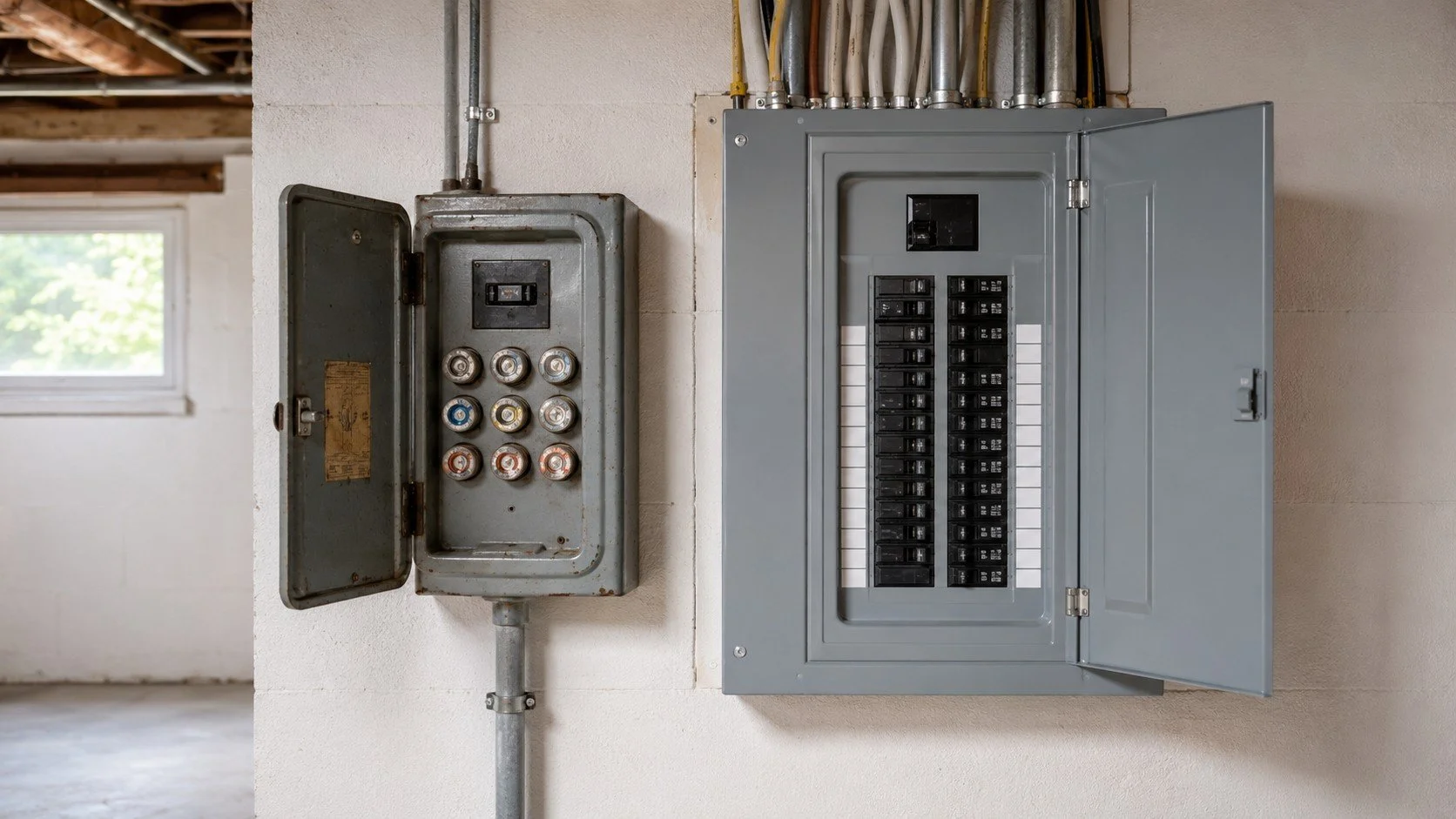
If your home still runs on a fuse box, you are not alone, but you are in shrinking company. Fuse boxes were the standard until breaker panels took over decades ago. They still work, yet most Ontario homeowners replace them when they renovate, add load, or run into insurance questions. Here is how the two compare and why the switch is so common.
How a fuse box works
A fuse box protects each circuit with a screw-in fuse that contains a thin metal strip. When a circuit draws too much current, the strip melts and breaks the connection. That stops the overload, but the fuse is now spent and has to be replaced. There is no reset.
How a breaker panel works
A breaker panel does the same protective job with circuit breakers instead of fuses. When a breaker senses an overload or fault, it trips and cuts power. You simply flip it back on once the issue is cleared. Modern panels also accept safety breakers like arc fault and ground fault devices that a fuse box cannot use. If you want to understand why breakers trip in the first place, see our guide on why your breaker keeps tripping.
Why homeowners switch
The move from a fuse box to a breaker panel comes down to a few practical reasons:
- Convenience. You reset a breaker instead of hunting for the right fuse.
- Capacity. Fuse boxes are often small and low amperage, which limits modern appliances.
- Safety devices. Breaker panels accept arc fault and ground fault protection.
- Insurance. Some insurers treat older fuse boxes as a risk, much like knob and tube wiring.
- Tampering risk. Oversized fuses are a known hazard in old fuse boxes, since they let a circuit draw more than the wiring is rated for.
Because a fuse box usually comes with low amperage service, the switch often happens as part of a wider panel upgrade to 200 amp service.
What a conversion involves
Replacing a fuse box with a breaker panel is a service change, not a simple swap. A licensed electrician assesses your current service, pulls the ESA permit, coordinates the utility disconnect, installs the new panel, and reconnects and labels every circuit before the final inspection. If you are budgeting, our cost to replace an electrical panel page lays out the factors. We give you a clear written quote first.
Older wiring may need attention too
Homes with a fuse box often have older branch wiring as well. If that includes aluminum wiring or knob and tube, your electrician will flag it so you can plan the work in the right order.
Getting it done
A panel conversion belongs with a licensed Electrical Contractor that handles the permit and inspection. Kolji Bros Electrical replaces fuse boxes with modern breaker panels across Toronto and the GTA, with the ESA permit and inspection included on every job.
Frequently asked questions
Is a fuse box dangerous?
A well maintained fuse box is not automatically dangerous, but old boxes, oversized fuses, and low capacity raise the risk. Many owners replace them for safety and convenience.
Do I have to replace my fuse box?
Not by law in most cases, but insurers, renovations, and new appliances often push the change. An electrician can tell you whether yours should be replaced now.
Can you just swap a fuse box for a breaker panel?
It is more than a swap. It is a service change that needs a permit, a utility disconnect, and a final inspection, because it affects the main service of the home.
Will switching to breakers raise my home value?
It can help. A modern breaker panel removes a common inspection flag and reassures buyers and insurers that the electrical system is up to date.
Does a fuse box replacement need a permit in Ontario?
Yes. Replacing a fuse box with a breaker panel needs an ESA permit and a final inspection, handled by your licensed contractor.
Ready to retire your fuse box? Kolji Bros Electrical converts fuse boxes to modern breaker panels, handles the permit and utility coordination, and gives you a clear written quote first. Serving Toronto and the GTA.
Get your free quote