

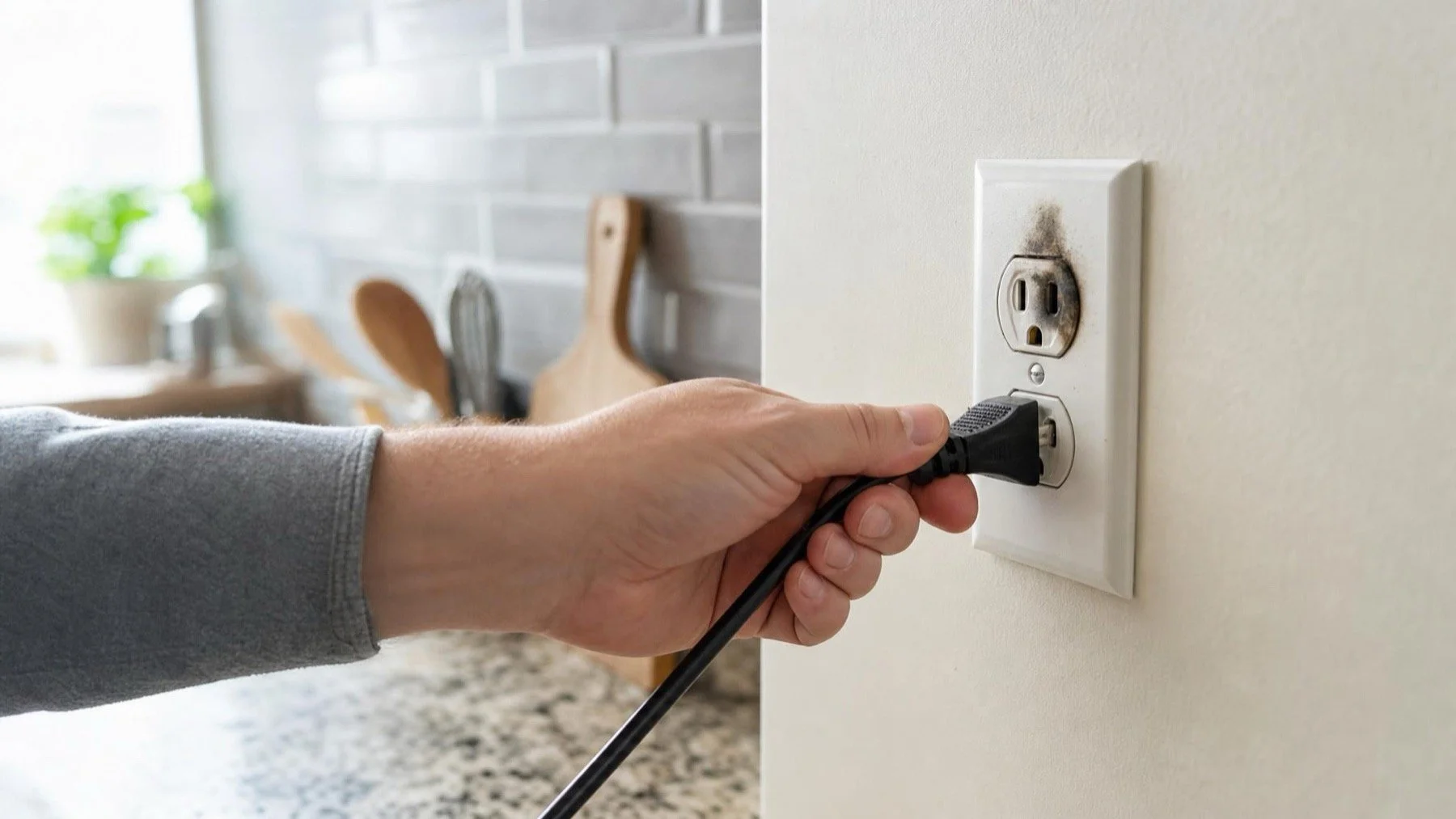
A tiny blue flash as a plug goes in is usually harmless. A scorch mark on the cover plate means the outlet needs to be checked.
You plug in the kettle and see a quick blue flash inside the outlet. Outlet sparking like that is common and usually harmless, because a small arc forms whenever a plug connects to a circuit that is ready to carry power. Larger sparks, a popping sound, smoke, a burning smell or a warm cover plate are a different story, and those deserve attention the same day.
This guide helps you sort the normal flash from the warning signs, tells you what to do right away, and explains what an electrician looks for. We get these calls from homeowners across Toronto and the GTA. The fix can be as small as a worn receptacle or as involved as a loose connection that has been heating up for months.
The normal flash and the four warning signs
When you plug in something that is already switched on, a little current jumps the gap just before the metal parts touch. That brief blue or white flash, gone in an instant, is normal. To limit it, switch appliances off before you plug them in or pull them out.
These signs mean the outlet, the plug or the wiring behind it needs attention:
- Size and colour. Sparks that are large, last longer than a blink, or look yellow or orange.
- Heat and smell. A cover plate that feels warm, a hot plastic smell, or brown or black marks around the slots.
- Loose grip. Plugs that fall out or wiggle, which often means the contacts inside are worn and connecting poorly.
- Sparks with nothing plugged in. Crackling or flashes from an empty outlet point to a fault inside the box.
What to do right now
- Stop using the outlet and unplug whatever was connected, if you can do it without touching anything scorched.
- Switch off the breaker for that outlet. Our after hours page tells homeowners to turn off the breaker and call right away when an outlet is sparking.
- Check the appliance cord and plug for cuts, crushed spots or melted plastic. If the cord is damaged, set the appliance aside until it is repaired.
- If you see smoke or flames, leave the house and call 911.
Do not take the cover plate off a sparking outlet to look inside while the circuit is on. The damage that causes sparking is usually on the back of the receptacle, right where the live wires connect.
Why outlets start sparking
Sparking usually comes from a handful of causes. Receptacles wear out with years of use, and worn contacts make poor connections that heat and arc. Loose wires on the terminals do the same thing from behind. Overloading is another cause, especially with space heaters and kitchen appliances sharing one outlet, and ESA guidance is never to overload outlets by plugging in too many cords. If outlets go dead after a spark, our guide on why outlets stop working covers the next checks.
Damaged covers and curious hands add risk. ESA guidance also says to replace missing or broken outlet cover plates immediately. If you have young children, the next receptacles you install should be the shuttered kind. ESA guidance recommends tamper resistant receptacles where young children live, because their shutters help keep objects out of the slots. ESA's page on preventing electrical shocks has more household tips.
What an electrician does about it
We start by testing the circuit and opening the box with the power off. Depending on what we find, the repair might be a new receptacle, a remade connection, a repaired section of cable or a change to how loads are split between circuits. We explain the cause in plain English before we fix it, so you know whether it is a one off or a sign of a wider problem.
Replacing a receptacle looks simple, but it is still electrical work. ESA guidance says hiring for electrical work in your home means hiring a Licensed Electrical Contractor, by law. Homeowners can work on the home they own and live in, though ESA guidance asks them to file a notification of work. For sparking after hours, or anything with smoke and heat, our after hours electrician service in Toronto is the number to call.
Electrical questions homeowners ask
Should I worry if my outlet sparks?
A tiny blue flash that disappears instantly when you plug something in is usually normal. Large, long, yellow or repeated sparks, or any spark with heat, smoke or a burning smell, mean you should switch off the breaker and call an electrician.
Can an outlet spark with nothing plugged in?
An empty outlet should not spark or crackle at all. Flashes or sounds from an outlet with nothing connected usually point to a loose or damaged connection inside the box, so turn off the breaker and have it checked.
Why is my outlet smoking and sparking?
Smoke with sparking means something is overheating, often a loose connection, a worn receptacle or a damaged plug. Turn off the breaker if it is safe to reach, do not touch anything scorched, and call 911 if you see flames.
Safety first next step after a spark
If the spark was a quick flash and nothing feels warm, switch appliances off before plugging them in and keep an eye on that outlet. If you saw anything bigger, leave the breaker off, note which outlets are affected and book a visit. Outlet sparking that keeps coming back is a repair job, not something to live with.
Book a KoljiBros assessment
We test the circuit, open the box safely and explain what caused the spark before any repair. After hours, weekend and holiday calls are billed at our emergency rate, quoted upfront before any work begins.
Kolji Bros. Electrical is a Licensed Electrical Contractor, ECRA/ESA #7015453.