

Hot Tub Electrical Installation in Ontario: Plan Before Delivery
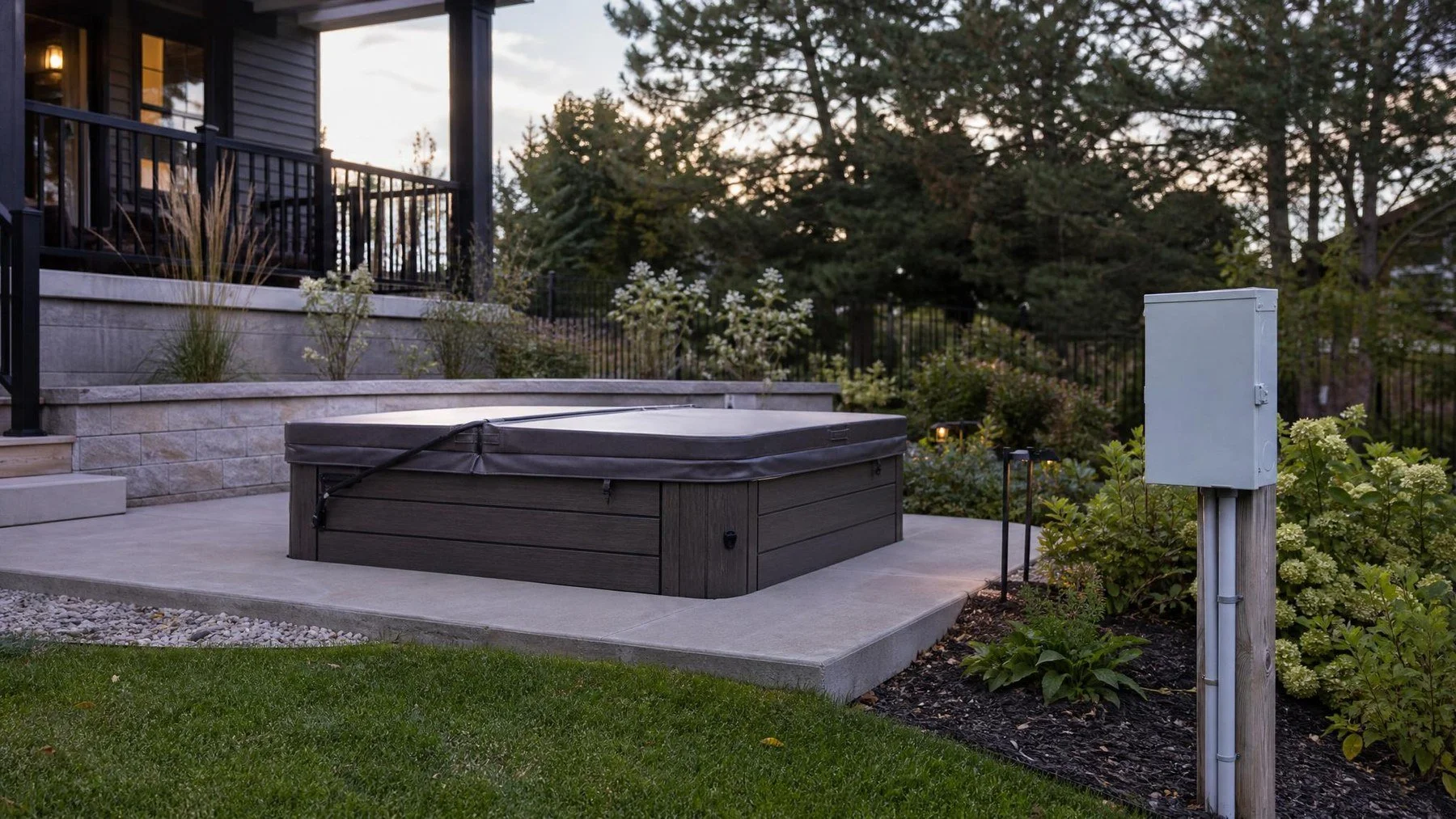
Distances from the tub to outlets, lights, and overhead lines should be settled before the pad is poured, not after the spa arrives.
A hot tub brings water, heat, pumps, and a large electrical load together in your backyard. It is also one of the few places where people sit in water beside electrical equipment for an hour at a time. That is why the planning needs to happen before the delivery truck shows up.
Across Toronto and the GTA, backyards are often tight, and many older properties have overhead service wires running across the yard. The spot that looks perfect for a tub may sit too close to a line, an outlet, or an air conditioner. Moving a filled hot tub later is hard work.
This guide covers choosing the location, the protection a hot tub needs, the panel review, the checks you can do safely, and who should do the wiring.
Pick the Spot With the Wiring in Mind
ESA's podcast episode on pools and hot tubs starts with placement. ESA says the first step is making sure the pool or hot tub meets the minimum clearances from overhead powerlines and communication lines, and that your local utility sets those clearance rules based on the voltage of the lines.
Clearance From Existing Electrical Equipment
On the same page, ESA Technical Advisor Trevor Tremblay explains that existing electrical equipment, such as lighting or an air conditioner, must be about three metres from the pool or hot tub unless it is suitably cut off by fences, walls, or permanent barriers. In the episode he adds that receptacles must also stay about three metres away, or about 1.5 metres if they are protected by a Class A ground fault circuit interrupter.
Think About Service Access
Leave room around the tub's equipment panel for a technician to work. Keep the disconnect where it is easy to reach but clear of the water. Plan paths, decks, and fences so none of them block access later.
Why Hot Tub Safety Gets Special Attention
Ontario's safety numbers show that more electrical harm now happens away from work. ESA's 2024 Ontario Electrical Safety Report found that electrical fatalities outside of work, including at home and in the broader community, increased 40 percent over the past decade, while workplace fatalities decreased 59 percent.
ESA's more recent podcast on pool and hot tub code changes describes updated bonding rules meant to prevent shocks from stray voltage around the water.
“We had one example of people just relaxing in their hot tub. They started feeling some electric shocks because of a nearby metal fence.”
Trevor Tremblay, ESA Technical Advisor
What Bonding Does
ESA explains that the goal of the updated Code is to make everything around the pool or tub the same electrical potential, so that even with stray current nearby, there is no difference to shock you. ESA also notes that the Ontario Electrical Safety Code treats hot tubs the same as pools for bonding. Your electrician handles this, and it is one more reason to plan the pad, deck, and fencing with the wiring.
Protection Every Hot Tub Installation Needs
Hot tub wiring follows the manufacturer's installation manual and the Ontario Electrical Safety Code. Three items come up on almost every job.
Ground Fault Protection
A ground fault circuit interrupter cuts power quickly when current leaks to ground, which is the fault water can cause. ESA notes that GFCIs can be built into devices such as hot tubs, and that plug in tubs usually come with a ground fault device molded into the cord. A hardwired tub gets its protection as part of the installation. Test it as the manual describes. Our GFCI outlet installation service covers the outdoor outlets around the tub.
A Disconnect You Can Reach
A hot tub needs a way to shut off power for service and emergencies. The Code and the tub's manual set where the disconnect goes and how far it sits from the water. Ask your electrician to show you where it is and how to use it.
Bonding the Metal Around the Tub
Metal parts near the tub, such as rebar in a concrete pad, railings, or a metal fence, may need bonding. Tell your electrician what the pad and surroundings are made of before anything is poured or built.
Plan the Route From the Panel to the Pad
The supply has to travel from your panel, often in the basement, out through a wall and across the yard to the tub. That route touches several trades, so settle it before the pad, deck, or landscaping goes in.
Through the House
Ask your electrician where the cable will leave the house and which finished ceilings or walls it will cross. Agree on who opens and patches them. If you are renovating the basement at the same time, run the supply while the ceiling is open.
Across the Yard
If the cable runs underground, the trench, the burial method, and the timing of backfill all matter. ESA inspects buried wiring before it is covered, so do not let the landscaper backfill or pour until your electrician confirms the underground stage has cleared. Before anyone digs, request utility locates so the crew knows where existing lines run. Photograph the open trench for your records. Hot tub and backyard wiring is part of our residential electrical services.
Review the Panel Before You Buy
A hardwired hot tub is a large, long running load. It often runs its heater in winter, when your home's heating also draws the most power. Your electrician should review the panel's condition and space, the service size, and your other large loads before you choose the tub.
If the Panel Is Near Its Limit
Some homes connect a hot tub with no change. Others need panel work or a larger service first. The answer comes from the load review. Our electrical panel upgrade page explains the options.
Buying Online
ESA warns that hot tubs bought online may not arrive certified for use in Canada, and an electrician cannot connect unapproved equipment. Check for a recognized Canadian certification mark before you pay.
Safe Checks Before and After Delivery
You can prepare the site and watch for problems without touching any wiring.
Checks You Can Do
- Look up from the planned spot and note any overhead wires.
- Measure roughly to nearby outlets, lights, and the air conditioner, and share the numbers with your electrician.
- Photograph the closed panel and the route to the backyard.
- Once installed, test the ground fault protection as the manual describes.
- Book a yearly electrical check when you open the tub in spring, as ESA suggests for pools and hot tubs.
When to Get Out and Call
If you feel a tingle in the tub or from nearby metal, get everyone out of the water and, if you can do it safely without touching the water, switch the tub off at its disconnect. Call a licensed electrician. Do the same if the ground fault device trips repeatedly, you smell burning near the equipment, or water pools near the disconnect or wiring. Do not use the tub until it is checked.
Hiring a Licensed Electrician for a Hot Tub
ESA's pool and hot tub guidance notes that a hot tub installed at an existing home counts as a residential renovation, which falls under the notification process. ESA states that if you hire someone to do electrical work in your home, that person must be a Licensed Electrical Contractor. Homeowners may do their own electrical work in a home they own and live in, with an ESA notification. A hardwired tub involves the panel, bonding, and outdoor wiring, so professional installation is recommended.
Before you hire, check the contractor's licence number with ESA. A pool or spa supplier may recommend an electrician, but the licence check is still yours to make.
What Shapes Hot Tub Wiring Costs in Toronto
In Toronto, the cost of hot tub wiring depends on the tub model, the distance from the panel to the tub, the route through the house or yard, panel space and condition, any service upgrade, and bonding work around the pad. Contact Kolji Bros. Electrical for an assessment and a written quote.
Hot Tub Electrical FAQ
How far does a hot tub need to be from an outlet?
ESA says receptacles should be about three metres away, or about 1.5 metres if protected by a Class A ground fault circuit interrupter. Your electrician confirms the layout.
Does a hot tub need a GFCI?
Yes. Hot tub installations need ground fault protection. Plug in tubs usually have it in the cord, and hardwired tubs get it as part of the installation.
Can I put a hot tub under overhead power lines?
Only if it meets the utility's clearance rules. ESA says your local utility sets the clearances based on the voltage of the lines. Check before you choose the spot.
Can a plug in hot tub run on an extension cord?
Follow the maker's instructions for the outlet it needs. ESA advises using extension cords only temporarily, because they crack and fray, which can lead to a shock or fire.
Will my panel handle a hot tub?
It depends on the tub, your service, the panel, and your other large loads. Have the panel reviewed before you buy.
Do I need an ESA permit for a hot tub?
A hot tub installed at an existing home counts as a residential renovation. When you hire the work, your Licensed Electrical Contractor files the ESA notification.
How often should a hot tub be checked?
ESA suggests routine electrical maintenance, with a good time being when you open the pool or tub in spring.
The Bottom Line on Hot Tub Wiring
Plan the hot tub's electrical work before delivery. Choose the model, check the overhead lines and nearby equipment, have the panel reviewed, and let a licensed electrician handle ground fault protection, bonding, and the disconnect. Then test it as the manual says and book a yearly check each spring.
Adding a hot tub to your backyard?
Kolji Bros. Electrical reviews your spa model, yard layout, and panel, then plans the protection, bonding, and disconnect before your tub arrives. We serve homeowners across Toronto and the GTA.
Kolji Bros. Electrical is a Licensed Electrical Contractor, ECRA/ESA #7015453.