

Dedicated Circuits for a Home Renovation
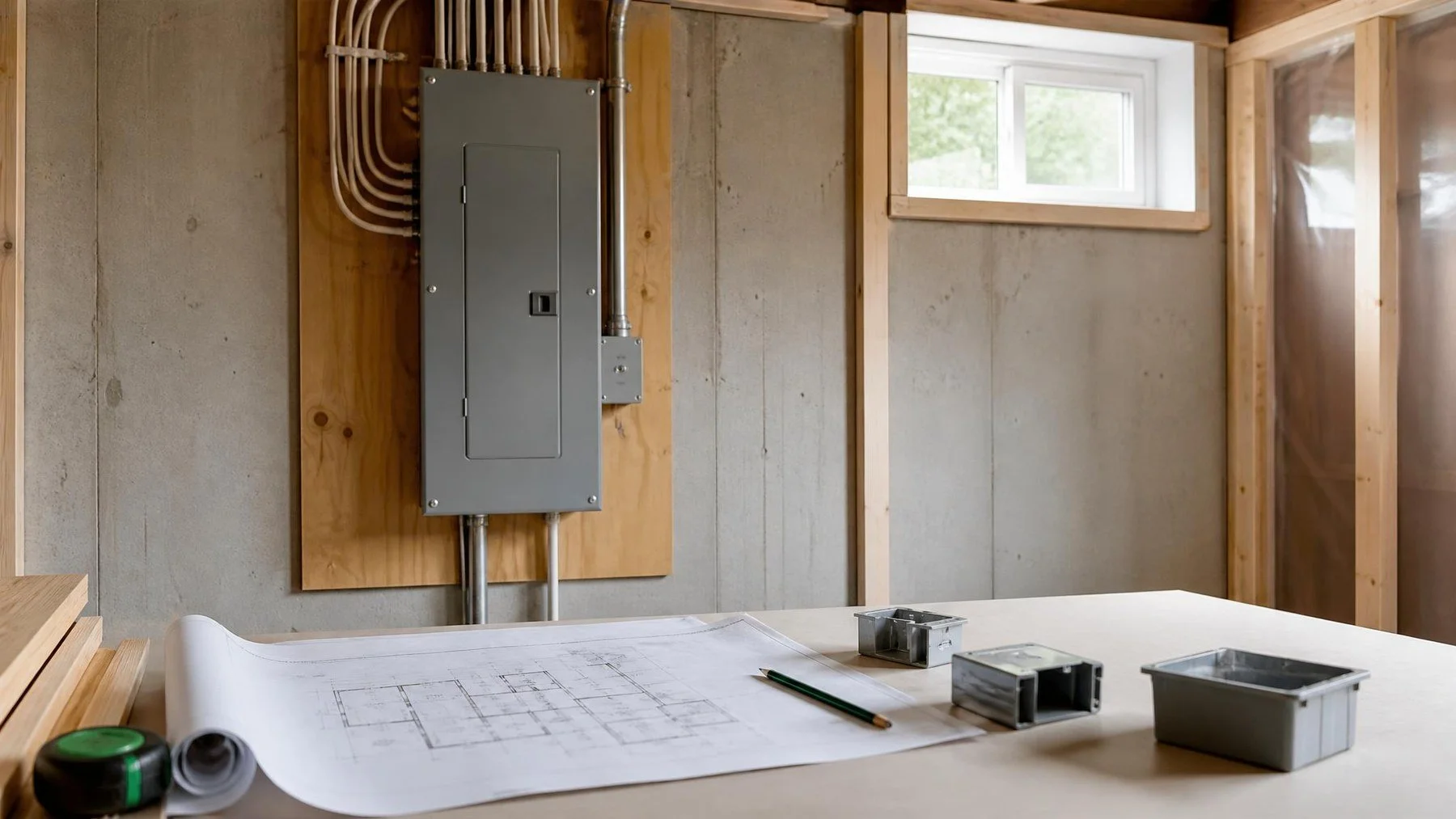
Each dedicated circuit is sized from the appliance's own manual and nameplate, so gather the model numbers before rough in.
A dedicated circuit feeds one appliance and nothing else. No lamps, no phone chargers, no vacuum sharing the same breaker. Big appliances get their own circuit so they have the power they need without tripping a breaker every time something else turns on.
Renovations add dedicated loads fast. A new kitchen, a laundry room, a heat pump, an EV charger, or a workshop can each add one or more. In Toronto and the GTA, many older homes were wired when a house had a fridge, a range, and not much else. A renovation is when you match the circuits to the equipment you now own.
This guide explains which appliances need their own circuit, how to build the circuit plan from your equipment list, how the panel fits in, the checks you can make safely, and who should do the work.
Which Appliances Need Their Own Circuit
The equipment's installation manual and the Ontario Electrical Safety Code set the requirement. Your electrician reads both. The list below shows the kinds of equipment that commonly get a dedicated circuit in a renovation.
Common Dedicated Loads
- Range, cooktop, or wall oven.
- Dishwasher, microwave, and refrigerator.
- Washer and dryer.
- Furnace, heat pump, air conditioner, or electric baseboards.
- Electric water heater.
- EV charger.
- Sump pump, hot tub, or workshop tools.
The Laundry Room Example
ESA's guide to a fully loaded laundry room says the washing machine needs a 120 volt, 15 or 20 amp receptacle on its own circuit, placed out of reach directly behind the machine. It adds that at least one other receptacle belongs in the laundry room for items such as an iron or steamer, and that one can share the washer's circuit. A plan this specific keeps the laundry working without cords across the floor.
Build the Plan From Your Equipment List
The question to ask is simple. Which exact equipment will the finished home contain? The circuit plan grows from that answer.
What Goes on the List
Write down every fixed or high demand item being added, moved, or replaced. Include the model number and keep the installation manual. Two appliances that look alike can need different supplies. If a model changes late, tell your electrician, because the circuit may need to change too.
Four Questions Per Circuit
- Supply: what voltage, current, and connection does the equipment need?
- Capacity: does the new load fit the service and panel?
- Route: how will the wiring reach the equipment around joists, ducts, and pipes?
- Control: where do switches, thermostats, or disconnects need to go?
If you are unsure how many outlets share a regular circuit, our guide on how many outlets you can put on one circuit explains the difference between general and dedicated circuits.
Why Load Planning Matters More Every Year
Homes are adding more electric equipment, not less. ESA's 2024 Ontario Electrical Safety Report notes that electricity demand in Ontario is projected to grow 75 percent by 2050. At home, that trend looks like more heat pumps, EV chargers, and electric appliances on the same service.
Panel Space Versus Service Capacity
Open breaker spaces tell you only that there is room for a breaker. They do not tell you whether the service can carry the extra load. For EV chargers, ESA Technical Advisor Trevor Tremblay explains in ESA's EV supply equipment episode that a charger does not always need a service upgrade, and that the answer depends on a load calculation under the Code or on the home's historical demand. The same logic applies to every large load in a renovation.
EV Chargers Are Often the Biggest Load
An EV charger runs for hours at a time. Plan its circuit with the rest of the renovation, not as an afterthought. Our guide to an EV charger panel upgrade explains when the panel needs work, and our EV charger installation service covers the full job.
Where Renovations Add Circuits Most Often
Some parts of a renovation add dedicated circuits almost every time. Knowing where they cluster helps you plan routes and panel space early.
Kitchens
Kitchens are where dedicated circuits pile up fastest, often several in one project: the range or cooktop, the dishwasher, the microwave, the fridge, and sometimes a second fridge, a wine fridge, or a garburator. Each runs to a fixed spot set by the cabinet drawings. Settle those drawings before the electrician prices the circuits.
Basements and Laundry Rooms
A finished basement often gains a laundry room, a bar fridge, a sump pump, or electric heat. The sump pump deserves thought. If it shares a circuit with other loads and that breaker trips, the pump stops. Ask your electrician how to supply it so a tripped kitchenette outlet does not take the pump down with it.
Garages and Workshops
Garages collect big loads: an EV charger, a compressor, a table saw, or a freezer. Tools with motors draw a surge of current when they start. Plan the workshop circuits around the tools you actually own, and keep the EV charger on its own supply.
Label Every New Circuit Clearly
A panel directory helps only if someone can read it quickly during an outage. New circuits should name the room and the appliance, such as basement laundry washer or kitchen island outlets. Avoid labels like miscellaneous or spare when the circuit serves a known load.
Document Future Provisions
If you run a route or conduit for a future EV charger or workshop, write down where it starts and ends and what it was meant for. An unlabelled empty conduit helps no one. A spare breaker or unused cable should never be described as ready for an appliance that has not been chosen.
When that future appliance arrives, your electrician still reviews its manual, the load, and the route. A documented provision makes that review faster and cheaper, because nobody has to open walls to find out what is already there. Keep the note and a photo with your panel directory.
Signs a Circuit Is Overloaded Today
Your current home can tell you where dedicated circuits are missing. You can notice these signs without opening anything.
Safe Checks
- Note which appliances trip a breaker when they run together.
- List outlets that feel loose or where plugs fall out.
- Note lights that dim when the microwave, dryer, or air conditioner starts.
- Look for power bars chained together or extension cords used every day.
- Look for discoloured outlet covers or melted plugs.
If one breaker trips again and again, read our guide on why a breaker keeps tripping, and do not keep resetting it.
When a Circuit Needs Attention Now
Stop using the outlet or appliance and call a licensed electrician if you see scorch marks, smell burning plastic, feel heat from a plug or cover plate, or hear buzzing from an outlet or switch. A breaker trips to protect the wiring. Repeated trips mean the circuit needs attention.
Who Should Add Dedicated Circuits
Each new circuit starts at the panel. ESA states that if you hire someone to do electrical work in your home, that person must be a Licensed Electrical Contractor who files an ESA notification. Homeowners may do their own electrical work in a home they own and live in, with their own notification. Because this work happens inside the panel, professional installation is recommended. You can check any contractor's licence number with ESA before you hire.
Questions to Ask Before Work Starts
- Which appliances in my plan need their own circuit, and which manual says so?
- Did the load calculation include every new and existing large load?
- Where will each circuit run, and which finished walls will be opened?
- How will the new circuits be named in the panel directory?
- Who files the ESA notification, and when is the rough in inspection?
Clear answers to these questions make quotes easier to compare, because each bidder prices the same list of circuits.
What Shapes the Cost in Toronto
In Toronto, the cost of adding dedicated circuits depends on the number of circuits, the distance from the panel to each appliance, how easily wiring passes through finished walls, the panel's space and condition, and whether the service needs an upgrade. Contact Kolji Bros. Electrical for an assessment and a written quote.
Dedicated Circuit FAQ
What is a dedicated circuit?
A circuit that feeds one appliance or piece of equipment and nothing else, so the appliance gets the power it needs without sharing.
Does a washing machine need its own circuit?
Yes. ESA says a washing machine needs a 120 volt, 15 or 20 amp receptacle on its own circuit.
Can I add a dedicated circuit if my panel has an empty space?
An empty space is only part of the answer. Your electrician also checks whether the service can carry the new load, using a load calculation or the home's historical demand.
Does an EV charger always need a service upgrade?
No. ESA explains it depends on a load calculation under the Code or on the home's historical demand. Older services may still be worth upgrading.
Should a sump pump have its own circuit?
Ask your electrician. A pump that shares a circuit stops whenever that breaker trips, so a supply that other loads cannot trip is worth discussing.
How should new circuits be labelled?
Name the room and the appliance, such as garage EV charger or basement laundry washer, so anyone can find the right breaker quickly.
Do I need an ESA permit to add a circuit?
Yes. A new circuit is electrical work that ESA expects to be reported through a notification. The person doing the work files it, which is your contractor when the work is hired.
The Bottom Line on Dedicated Circuits
Start with the equipment, not the breaker count. List every appliance with its model and manual, let your electrician check supply, capacity, route, and control for each one, and label the panel so it makes sense years from now. A renovation planned this way runs its new equipment without tripped breakers or overworked outlets.
Adding big appliances or an EV charger?
Kolji Bros. Electrical turns your equipment list into a circuit plan, checks your panel and service, and labels every new circuit clearly. We serve homeowners across Toronto and the GTA.
Kolji Bros. Electrical is a Licensed Electrical Contractor, ECRA/ESA #7015453.