

Bathroom Renovation Electrical Planning: Power, Light and Ventilation
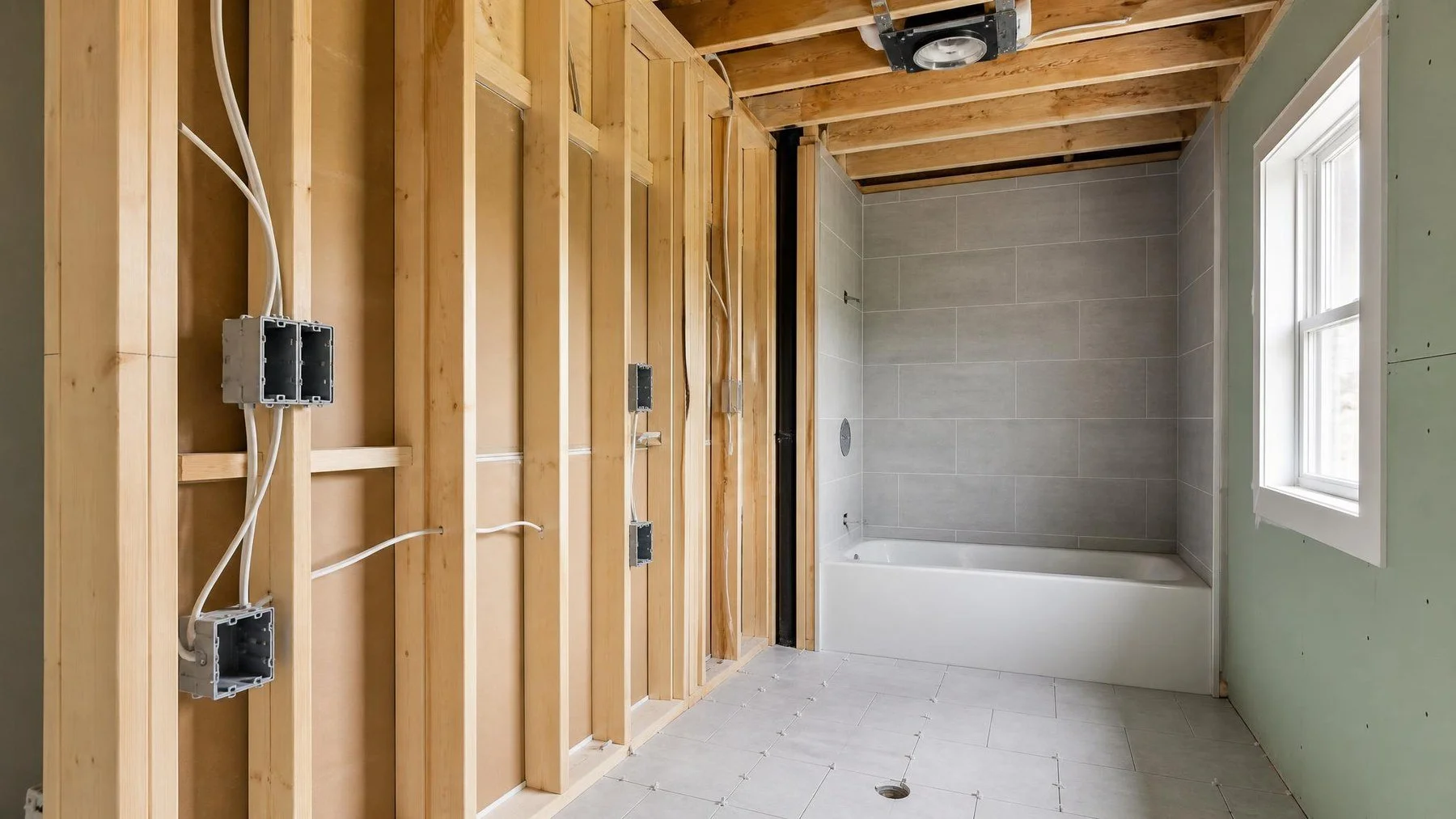
In a bathroom, the marking on a light or fan decides where it can go, so choose fixtures before the ceiling is framed.
A bathroom is small, wet, and busy. In a few square metres you need bright light at the mirror, a fan that clears steam, outlets for a hair dryer and a toothbrush, and maybe heated floors or a towel warmer. Every one of those items sits near water.
That mix makes bathroom wiring less forgiving than most rooms. In Toronto and across the GTA, many bathroom renovations happen in older homes where the original bathroom had one light, one outlet, and no fan on its own switch. A renovation is the time to plan it properly.
This guide covers the products that suit wet areas, where outlets and controls belong, how to plan light and ventilation, the checks you can do safely, and who should do the work.
Choose Products Rated for a Wet Room
Not every light or fan can go anywhere in a bathroom. The product's marking decides where it belongs. ESA's ensuite guide, One Sweet Ensuite, explains that shower lighting has special requirements by law. You need lighting marked suitable for wet locations on both the packaging and the light itself.
Fans and Fan Lights Over the Tub or Shower
The same ESA guide says an exhaust fan or a fan and light combination above a bath or shower must be marked suitable for ceiling installation over a tub or shower. Check the marking before you buy. A fixture you love in a showroom may only suit a dry area of the room.
Approved for Use in Canada
Mirrors with built in lights, heated towel bars, and smart toilets are often sold online. Make sure every electrical product carries a recognized Canadian certification mark. Your electrician cannot connect equipment that lacks one.
Plan Outlets and Controls Around Water
Water and electricity share this room, so outlet and control locations follow stricter rules than a bedroom or hallway.
GFCI Protection Near the Sink, Tub, and Shower
ESA's bathroom guide on hidden conveniences explains that outlets close to the sink, shower, or bathtub require GFCI protection. A GFCI cuts power fast when it detects current leaking to ground, which is the kind of fault water can cause. Your electrician lays out outlets and GFCI protection under the Ontario Electrical Safety Code.
Outlets Inside Cabinets and Drawers
Many new vanities hide the hair dryer and its outlet inside a drawer. ESA says an outlet enclosed in cabinetry needs a special interlocking switch that turns off the power when the door or drawer closes, to prevent overheating and fire. Tell your electrician and your cabinet maker early, because the interlock affects both.
Heated Floor Thermostats
The same ESA guide notes that a heated floor thermostat must be at least one metre from a bathtub or shower stall, or be GFCI protected. Place it where you can reach it from the door without crowding the vanity.
Light the Mirror, the Shower, and the Room
One ceiling light rarely works in a bathroom. Plan light in layers for each job.
Three Kinds of Bathroom Light
- General light for moving around and cleaning.
- Face light at the mirror, from the sides or above, to avoid shadows.
- Shower or tub light, with the right wet location marking.
A low night light on its own switch helps late night trips. Our lighting installation team can plan the layers and switches with your mirror and vanity sizes.
Draw the Walls, Not Only the Floor
A floor plan shows the tub and vanity. It does not show the mirror height, the medicine cabinet, the backsplash, or the edge of the glass. Ask your designer for wall elevations. A box centred on a bare wall may end up off centre once the mirror and cabinet go in.
Heat, Steam, and Extra Circuits
Luxury features add load. ESA's ensuite guide notes that steam showers and jetted tubs often have additional power requirements that can mean a larger conductor or breaker.
Plan Towel Warmers and Heated Floors Early
Towel warmers, heated floors, and heated toilet seats all need power in specific spots. ESA advises working with your Licensed Electrical Contractor early to identify extra circuits, and having the contractor review every manufacturer's installation instructions. Instructions vary by product.
Hair Tools and Tripped Breakers
ESA also suggests considering a dedicated circuit for a busy bathroom, so several hair styling tools running at once do not strain other areas of the home. If your current bathroom breaker trips when two people get ready together, read our guide on why your breaker keeps tripping.
Ventilation Needs Power, a Route, and a Control
A bathroom fan only works if it runs long enough and vents to the outside. That makes it a job for two trades. The electrician powers the fan and its control. The contractor or HVAC trade runs the duct to an exterior termination.
Pick the Fan and Its Control Together
Decide whether the fan runs on a plain switch, a timer, or a humidity control. A timer or humidity control keeps the fan running after you leave, which helps clear steam from mirrors and walls. Put the control where people will use it, usually by the door. If the fan includes a light, decide whether the light and fan share a switch or each get their own.
Solve the Ceiling Before It Closes
Bathroom ceilings get crowded. Pot lights, the fan housing, the duct, plumbing vents, and joists all compete for the same space. Give your electrician the final fan model and light locations, and ask the contractor to confirm the duct route, before anyone cuts the ceiling. Moving a fan after drywall means patching and painting.
Keep the Bathroom Trades in Order
Bathrooms have more finish layers than most rooms. Waterproofing, tile, glass, and millwork all go on after the wiring is hidden. A sequence that works for most bathroom renovations looks like this:
- Settle the vanity, mirror, shower, and fixture choices.
- Rough in plumbing, ventilation duct, and electrical.
- Clear the electrical rough in inspection stage.
- Close walls, waterproof, and tile.
- Install fixtures, fans, and devices, then test every circuit.
Covering a box with tile by mistake is costly to undo, so ask the tiler to mark every box before work begins.
Why Shock Protection Matters in Family Bathrooms
ESA's page on preventing electrical shocks reports that, on average, more than 110 children under 15 end up in an Ontario emergency department each year because of an electrical injury. More than half are under the age of five. ESA recommends GFCIs in any room with water, including bathrooms.
Safe Checks in Your Current Bathroom
- Press the test and reset buttons on each GFCI outlet once a month.
- Check that the fan clears steam within a few minutes after a shower.
- Look for rust, discolouration, or moisture on switch and outlet covers.
- Replace any cracked or missing cover plate with a new one.
- Keep hair tools unplugged and away from the sink when not in use.
Warning Signs in a Wet Room
Stop using the outlet or fixture and call a licensed electrician if a GFCI will not reset, you feel a tingle from a tap or fixture, a switch or outlet feels warm, water drips from a ceiling light or fan, or you smell burning. Do not open the fixture or the box to look inside.
Licensed Work for a Wet Room
Bathroom wiring leaves little room for error. ESA states that if you hire someone to do electrical work in your home, that person must be a Licensed Electrical Contractor who files an ESA notification. Homeowners may do their own electrical work in a home they own and live in, with their own notification. Because this room combines water, heat, and new circuits, professional installation is recommended. Before you hire, check the contractor's licence number with ESA. Our bathroom electrical service covers the full renovation scope.
What Shapes the Price in Toronto
In Toronto, bathroom electrical costs depend on the number of new circuits, heated floors or towel warmers, the fan and its ducting route, the lighting layers, cabinet outlets with interlocks, and how easily wiring reaches the room in an older house. Contact Kolji Bros. Electrical for an assessment and a written quote.
Bathroom Electrical FAQ
What kind of light can go in a shower?
ESA says shower lighting must be marked suitable for wet locations on the packaging and on the light itself.
Can a bathroom fan go directly over the tub?
Only if it is marked suitable for ceiling installation over a tub or shower. Check the marking before you buy.
Can I put an outlet inside my vanity drawer?
Yes, with the right device. ESA says outlets enclosed in cabinetry need an interlocking switch that cuts power when the door or drawer closes.
Where can a heated floor thermostat go?
ESA says at least one metre from a bathtub or shower stall, unless it is GFCI protected.
Does a steam shower need its own circuit?
Often. ESA notes steam showers and jetted tubs can have extra power needs. Give your electrician the model and instructions before rough in.
What switch should a bathroom fan have?
A timer or humidity control keeps the fan running after you leave, which helps clear steam. Place the control by the door and pick it together with the fan model.
Do I need an ESA permit for bathroom wiring?
Yes, in almost every case. New bathroom circuits, fans, lights, and heated floors are reported to ESA through a notification, which your hired contractor files before work starts.
The Bottom Line on Bathroom Electrical Planning
Plan the bathroom wiring around water first. Choose lights and fans with the right markings, protect outlets near the sink, tub, and shower, put interlocks on cabinet outlets, and pick heated features before rough in. Then light the room in layers so the mirror, the shower, and the whole space each get the light they need.
Renovating a bathroom or ensuite?
Kolji Bros. Electrical plans lighting, ventilation, heated floors, and protected outlets around your vanity and shower layout. We work with homeowners across Toronto and the GTA.
Kolji Bros. Electrical is a Licensed Electrical Contractor, ECRA/ESA #7015453.