

Outdoor Renovation Electrical Planning for Ontario Homes
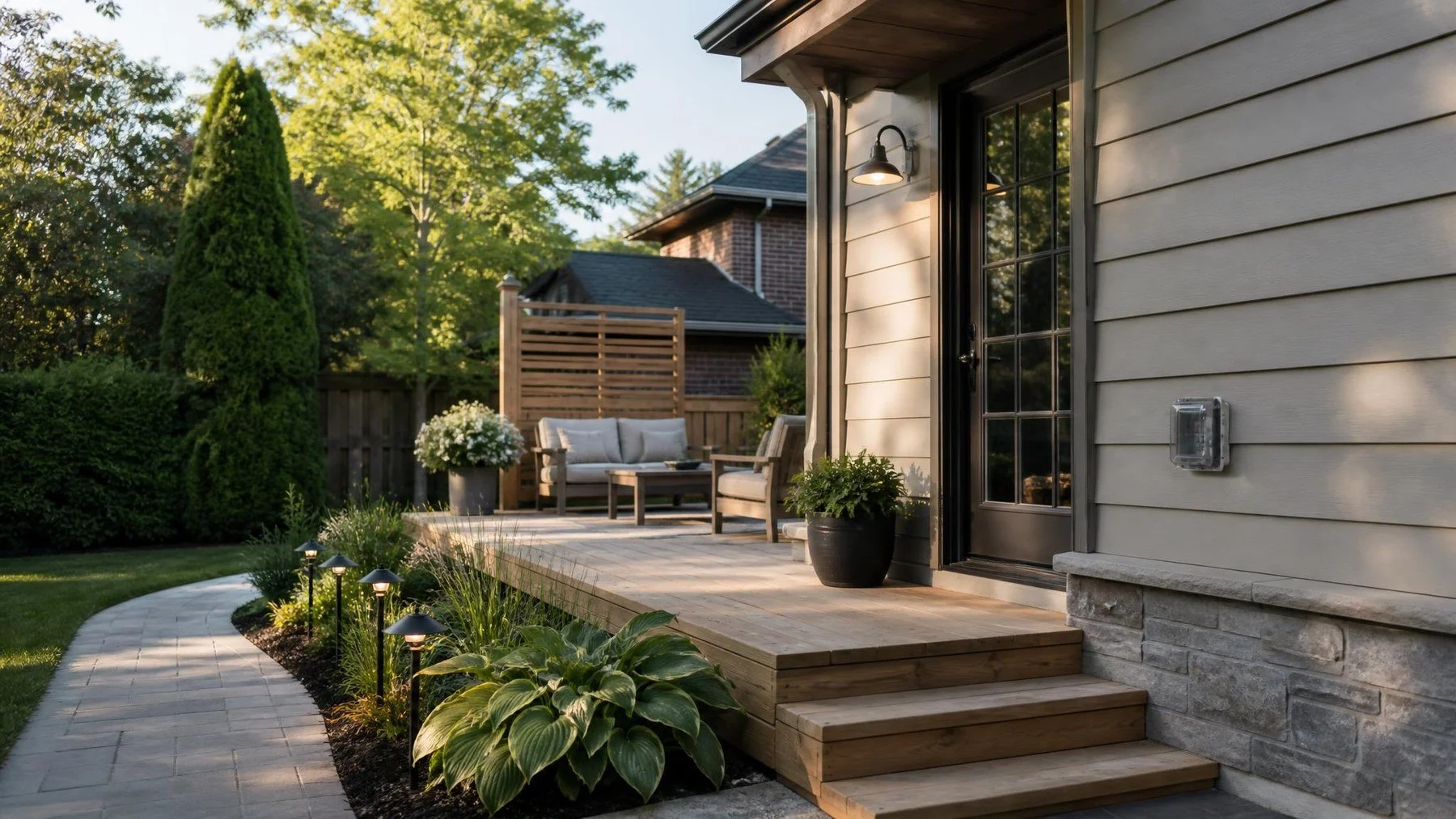
Buried cable routes are easiest to plan, inspect, and photograph before the patio stones and planting cover them.
An outdoor renovation changes how you use your yard after dark and through the seasons. Path lights, deck outlets, a shed with power, security cameras, a pond pump, or an EV charger in the driveway all need wiring that runs outside, often underground.
In Toronto and across the GTA, yards are often small and crowded with gas lines, water services, fences, and old trees. Once the patio is laid and the gardens are planted, the wiring route is locked in. Planning the electrical layer with the landscape design saves you from lifting stone later.
This guide covers how to plan outdoor power by use, what Ontario requires before anyone digs, what makes outdoor wiring different, the checks you can make safely, and who should do the work.
Plan Outdoor Power Around How You Use the Yard
Walk the finished yard on paper. Mark how people move from the back door to the deck, the gate, the shed, and the driveway. Mark where you will actually plug things in. That map tells you where light and power belong.
Group Your Needs by Use
- Paths and steps: lights that help people walk safely at night.
- Deck and patio: outlets for string lights, a heater, or a speaker.
- Shed or workshop: lighting, outlets, and any tools with motors.
- Water features: pump power and a way to shut it off for winter.
- Security: cameras, motion lights, and gate controls.
- Driveway or garage: an EV charger, now or later.
Choose Controls Before Fixtures
Decide what should turn on together and what needs its own control. Timers, motion sensors, and smart switches all change the wiring. Put controls where you can reach them from inside the house. Our lighting installation team can plan zones and controls with your landscape designer.
Before Anyone Digs
Digging without locates is dangerous and against the law in Ontario. Ontario One Call's page for homeowners explains that anyone excavating on public or private property must request locates through Ontario One Call. It advises submitting the request at least 5 business days before you dig.
Why Locates Matter
The same page cites Ontario Regional Common Ground Alliance data showing 4,402 reported damages to underground cables, pipes, and lines in 2021. It reports that 35 percent of those damages happened because no locate was requested, and 41 percent came from improper excavation practices. Hitting a buried electrical cable can shock or electrocute you, and nicking a gas line can cause leaks, fire, or explosions.
Private Lines Need a Separate Locate
Ontario One Call notifies the utilities that own buried public infrastructure. Lines you own are your responsibility. Ontario One Call lists examples such as electrical lines going out to sheds or a detached garage, gas lines to a barbecue or pool heater, and cables feeding security cameras. Hire a private locator for those before the landscaper starts.
What Makes Outdoor Wiring Different
Outdoor wiring faces water, frost, sun, lawn mowers, and shovels. The rules reflect that.
Burial Depth and Protection
ESA's outdoor lighting article, A Bright Idea for Outdoors, explains that buried wires must be installed at a minimum depth that ranges from 45 centimetres to one metre, depending on the voltage and the wiring method. It also says every component, from the lights to the wiring to the outlets, must be rated for outdoor use.
Outdoor Outlets
The same ESA article says an outdoor outlet should be protected by a Class A GFCI. If it is exposed to the weather, it needs a cover plate marked Extra Duty to keep out water and debris. An in use cover lets you keep a cord plugged in while the outlet stays protected.
The Underground Inspection
ESA's page on preparing for your inspection states that the underground inspection happens when directly buried conductors, cables, or conduits are installed and before any wiring is covered. Do not let the landscaper backfill the trench or lay the patio until your electrician confirms the stage has cleared.
Freeze the Route Before the Hardscape
The shortest line on a drawing may cross a gas line, a tree root zone, or a future footing. Compare the electrical route with drainage, irrigation, plumbing, retaining walls, and planting plans.
Coordinate the Trades
Agree on who digs the trench, who installs sleeves under paths and driveways, when the inspection happens, and who backfills. Put sleeves under hard surfaces before they are poured, even for future use. A spare sleeve under the driveway can save you from cutting concrete later.
Planning for an EV Charger
If an EV is in your future, plan the route to the driveway or garage now. Our guide to Level 1 vs Level 2 EV chargers explains the options, and our EV charger installation service covers the full job.
Pools, Ponds, and Water Features Need Their Own Plan
Water raises the stakes outdoors. ESA's backyard water feature article, Make a Splash in Your Backyard, says pools, spas, hot tubs, decorative ponds, and water features all have very specific electrical requirements.
Distances From Buried and Overhead Wires
The same ESA article notes that underground wires must keep a distance of one to six metres from the walls of a pool, and that required distances from overhead wires can reach 7.5 metres horizontally and vertically. A licensed electrical contractor works out the exact distances and coordinates with your utility where needed. Settle the pool or pond location before you plan any other buried route.
Grounding and Bonding Near Water
ESA also explains that the electrical source powering pool equipment, or anything within 1.5 metres of metal objects such as a pool ladder, must be properly grounded and bonded. A small pond pump still needs a protected outlet and a sensible cord route. Plan the pump outlet, its GFCI protection, and a way to shut it off for winter before the liner goes in.
Record What the Landscaping Will Hide
Photograph every open trench, sleeve, and junction point before backfill. Stand where you can see a fixed landmark, such as a corner of the house or a fence post. Mark the route on a simple site plan with measurements. Keep the photos and plan with your panel directory and inspection records. The next time someone digs a garden bed or sets a fence post, that record helps keep them off the cable.
Safe Checks for Your Yard
You can check a lot outdoors without touching any wiring.
What to Look At
- Press the test and reset buttons on outdoor GFCI outlets each spring and fall.
- Look for cracked, missing, or broken outdoor cover plates.
- Check that no cords run through puddles, under doors, or across walkways.
- Look up for overhead wires before you plan tall structures or trees.
- Note any outdoor light that flickers, stays on, or stays dark.
When an Outdoor Fixture Needs a Pro
Stop using the outlet or fixture and call a licensed electrician if a GFCI will not reset, water collects inside a cover, a fixture is cracked or hanging by its wire, you see exposed cable in the garden, or you smell burning. If a shovel hits a cable, step away and call the utility or your electrician. Do not pull on the cable.
Who Should Do Outdoor Electrical Work
ESA states that if you hire someone to do electrical work in your home, that person must be a Licensed Electrical Contractor who files an ESA notification. Homeowners may do their own electrical work in a home they own and live in, with their own notification. Outdoor circuits start at the panel and run underground, so professional installation is recommended. If your landscaper offers to handle the wiring, ask which licensed electrical contractor will do it and check its licence number with ESA.
What Drives Outdoor Wiring Costs in Toronto
In Toronto, outdoor electrical costs depend on the length and depth of the trench, the number of lights and outlets, the controls you choose, the distance from the panel, any sleeves under hard surfaces, and whether the panel has room for new circuits. Contact Kolji Bros. Electrical for an assessment and a written quote.
Outdoor Electrical FAQ
Do I need to call Ontario One Call before digging for outdoor lighting?
Yes. Ontario law requires a locate request before digging, and Ontario One Call advises submitting it at least 5 business days ahead.
Will Ontario One Call find the cable to my shed?
No. Ontario One Call covers public utility lines. Lines you own, such as cables to a shed or cameras, need a private locate.
How deep does outdoor wiring need to be buried?
ESA says the minimum depth ranges from 45 centimetres to one metre, depending on the voltage and the wiring method. Your electrician sets the depth for your route.
What kind of outlet do I need outdoors?
ESA says outdoor outlets should have Class A GFCI protection and, where exposed, a cover marked Extra Duty.
Does buried wiring need an inspection?
Yes. ESA's underground inspection happens before buried wiring is covered, so keep the trench open until the stage clears.
How far do buried wires need to be from a pool?
ESA says underground wires must keep a distance of one to six metres from the walls of a pool. Your electrician confirms the exact distance for your layout.
Can my landscaper install the wiring?
Only a Licensed Electrical Contractor can be hired to do electrical work in your home. Ask which one your landscaper uses and check the licence with ESA.
The Bottom Line on Outdoor Electrical Planning
Plan outdoor power with the landscape design, not after it. Request locates before anyone digs, including private lines, keep trenches open for the underground inspection, protect every outlet, and record the routes before the stone and soil go back. Your yard will look better at night and stay safer to dig in for years.
Planning a backyard or landscape project?
Kolji Bros. Electrical plans lighting zones, outlets, and buried routes with your landscaper, then keeps the work open for inspection before backfill. We serve homeowners across Toronto and the GTA.
Kolji Bros. Electrical is a Licensed Electrical Contractor, ECRA/ESA #7015453.