

Generator Transfer Switches: Manual vs Automatic
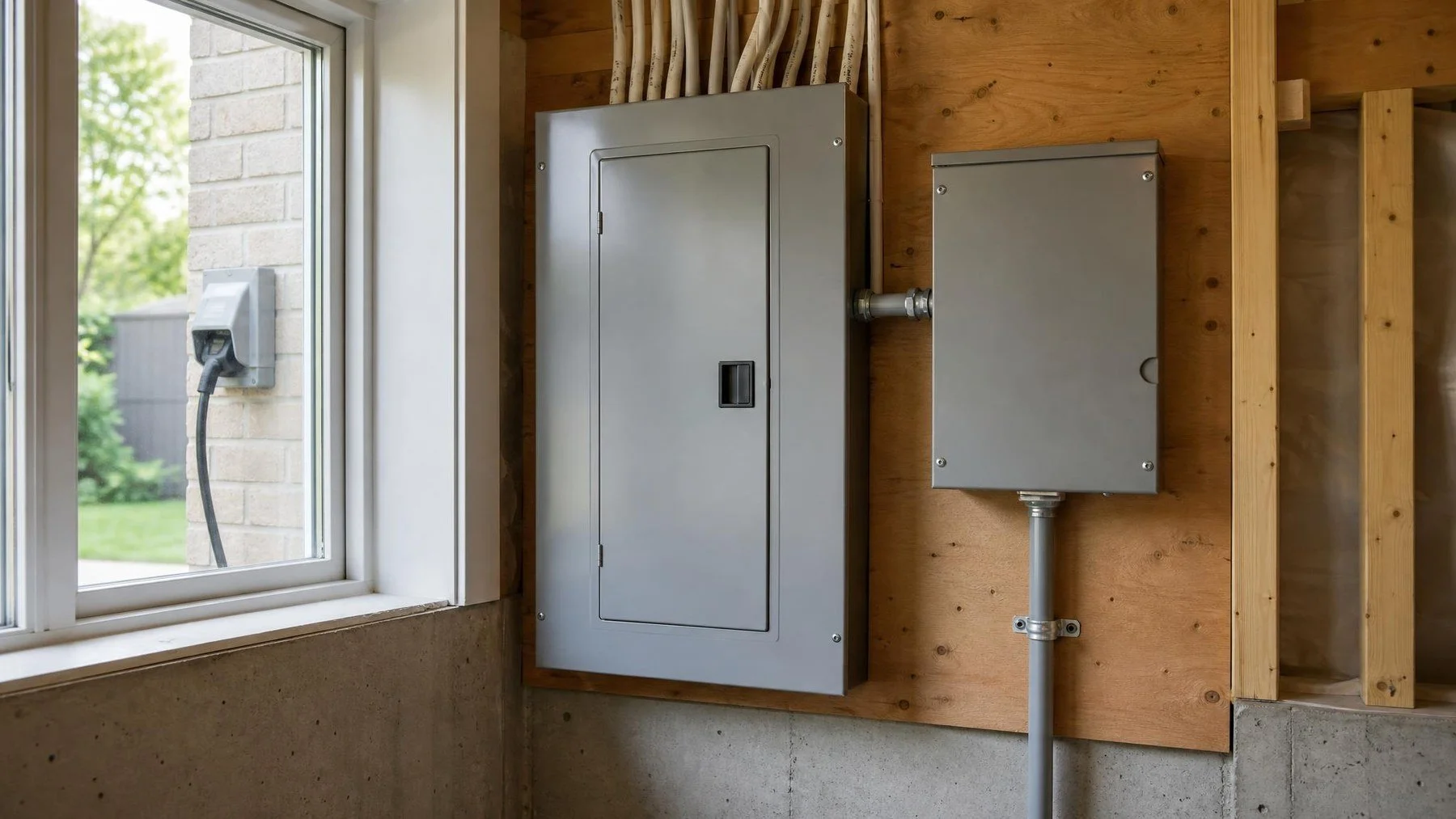
Choose the circuits you need during an outage before you choose the switch. That list decides most of what follows.
A generator transfer switch, or another approved transfer mechanism, prevents generator power from feeding back into the utility system. Manual transfer equipment usually pairs with a portable generator and a planned list of essential loads. Automatic transfer equipment is designed for standby systems that start and take over on their own. The correct choice depends on your generator, your electrical service and the loads you need during an outage.
We plan that load list with you before recommending either switch, because it shapes the generator size, the switch and any panel work. Across Toronto and the GTA, where winter storms and summer heat both bring outages, homeowners land on both sides of the choice. Here is how each option works, how to plan your loads, and the Ontario steps for a permanent connection.
What a Transfer Switch Actually Does
Your home normally draws power from the utility through the meter and the main panel. A generator is a second source. The transfer switch decides which source feeds the circuits it controls, and it is built so the two can never be connected at the same moment. When it is set to generator, the utility side is disconnected. When it is set back to utility, the generator side is disconnected.
ESA's generator safety guidance puts it plainly. Standby generators permanently connected to your electrical wiring must have a transfer device to protect your home and the utility system, because the device prevents generator power from flowing back into the utility system. ESA also warns that generators can create shock and fire hazards when they are improperly connected or used, and that the safety requirements apply to any backup source, whether automatic or manual.
This is why plugging a generator into a household outlet with a cord that has a plug on both ends is so dangerous. Power can flow back through your panel into the utility system, the exact risk ESA says a transfer device prevents. Toronto Hydro's outage safety advice is direct: never connect a generator directly to your home's wiring. Without a transfer device, plug appliances directly into the generator's own outlets.
Manual vs Automatic: How Each Works During an Outage
Both do the same core job. The difference is who switches and which generator sits behind it.
| Manual transfer | Automatic transfer | |
|---|---|---|
| Usual generator | Portable, wheeled out when needed | Standby, permanently installed outside |
| Who switches | You, by hand | The switch, once it senses utility power is gone |
| Circuits covered | A short list of essential circuits | Essential circuits or more, as planned with your electrician |
| Power gap | Lasts until you set up and switch over | Usually brief, while the generator starts |
| Best fit | Occasional outages, a home that can manage a short wait | Homes that need power back without anyone present |
The Manual Sequence With a Portable Generator
With a manual setup, your electrician installs the transfer equipment near your panel and, in most homes, a connection point on the outside wall. When the power goes out, you place the generator outdoors in its planned spot, connect the approved cord, start the generator, and then move the transfer switch to generator. When utility power returns, you reverse the steps: switch back to utility, then shut down and disconnect the generator.
The routine is simple, but someone at home must know it. Keep the steps on a card by the switch.
The Automatic Sequence With a Standby Generator
An automatic transfer switch watches the utility supply. When it senses an outage, it signals the standby generator to start, waits for it to run steadily, then transfers the chosen circuits. When utility power returns and holds, it switches back and lets the generator cool down and shut off. Nobody needs to be home, which suits households who travel or rely on a sump pump or medical equipment.
The trade off is a bigger project, with a permanent generator, a fuel supply and more electrical work.
Plan Your Essential Loads Before You Pick a Switch
Before you compare switches, make a list of what must run during an outage and what can wait. ESA's buying advice starts here too: understand your electricity requirements so the unit is the correct size and voltage for your use. Common essentials include the furnace blower and controls, the sump pump, the fridge and freezer, a few lights, internet equipment, and any medical devices. Large loads such as central air, an electric range or an EV charger change the picture quickly. Whether a switch can run the whole house depends on the generator size and the circuits you choose, and most portable setups cover the essentials only.
Group the list by circuit. Mark any panel labels you are unsure about. Your electrician then checks which circuits can share the generator at the same time, and whether some need to be moved or separated so the essentials sit together.
When the Panel Comes Into It
Transfer equipment connects at or near your main panel, so the panel's condition and space matter. A full or aging panel can limit your options, and some homes need panel work before the switch goes in. Our electrical panel upgrade page explains what that review looks at.
Approved Equipment and a Safe Generator Location
Everything in the system needs to be approved for use in Ontario. ESA's page on recognized certification marks states that electrical products must be approved by an accredited certification or evaluation agency before they are used or sold in Ontario, and that installing or connecting unapproved equipment is against the law. Check the generator, the transfer switch, the inlet and the cord for a recognized mark before you buy. ESA's generator guidance also lists an approved transfer device and a properly sized connector cord and plugs as accessories to buy with the generator.
Where the Generator Sits
ESA says never operate a generator inside your home or garage, because fatal fumes build up, and fans or open windows and doors will not give enough fresh air. Toronto Hydro adds that portable generators belong outdoors only, well away from open windows and doors. Plan a fixed outdoor spot first, then place the connection point to suit it. If anyone feels dizzy, nauseous, drowsy or short of breath while a generator runs, Toronto Hydro advises getting to fresh air immediately and seeking medical attention.
A few more points from ESA apply on the day you use it. Do not connect a portable generator to appliances or wiring that water has damaged. If you must use extension cords for individual appliances, use grounded three prong cords rated for the job, and uncoil them and lay them flat. Let the engine cool at least two minutes before refuelling.
Notification, Inspection and Who Does the Work
ESA states that you must file a notification of work with ESA to connect a generator permanently to your home's electrical system, and it strongly recommends hiring a Licensed Electrical Contractor so the generator is correctly installed. More broadly, ESA's page on notifications and inspections says that if you hire someone to do electrical work in your home, by law it must be a Licensed Electrical Contractor. Homeowners may do their own electrical work in a home they own and live in, but they must file the ESA notification themselves. Because this work ties into the main panel and a second power source, professional installation is recommended.
When a contractor does the work, they file the notification and arrange the inspection. Once the work passes, ESA issues a Certificate of Acceptance to whoever filed. Ask for a copy and keep it with your house records. Our post on ESA permits for electrical work in Ontario explains the process in more detail. Before you hire, check the contractor's licence with ESA. ESA says the 7 digit ECRA/ESA licence number should appear on the contractor's vehicle and estimate.
Safe Checks and When to Call
You can prepare a lot without opening the panel or touching any wiring.
Checks You Can Do
- Write your list of essential loads and note any medical equipment.
- Photograph your panel directory with the door closed over the breakers.
- Record the make, model and output rating on the generator you own or plan to buy.
- Look for a recognized certification mark on the generator and any cord or inlet.
- Pick an outdoor spot well away from windows, doors and air intakes.
Stop and Call an Electrician
Call a licensed electrician if someone has connected a generator to your home without a transfer device, if a cord with two male plugs is in your garage, if lights flicker or breakers trip when the generator runs, or if the transfer switch feels hot, smells of burning or will not move. Shut the generator off from outdoors and do not use the setup until it is checked.
What Shapes the Cost in Toronto
In Toronto, the cost of a transfer switch installation depends on manual or automatic transfer, the number of circuits, panel condition and space, the distance from the panel to the generator location, any wall or exterior work, and whether a standby generator needs a pad and fuel connection by others. For the generator itself, our post on backup generator cost in Ontario compares portable and standby units. Contact Kolji Bros. Electrical for an assessment and a written quote. Backup generator connections are part of our residential electrical services.
Electrical questions homeowners ask
How to connect generator to house without transfer switch?
You should not connect a generator to your home's wiring without a transfer switch or another approved transfer device. Toronto Hydro says never connect a generator directly to your home's wiring. Without a transfer device, plug appliances directly into the generator's own outlets, or have a Licensed Electrical Contractor install a transfer switch under an ESA notification.
The Bottom Line on Transfer Switches
A transfer switch is what makes a home generator connection safe. Choose manual if you have a portable generator, a short list of essentials and someone home to switch over. Choose automatic if you want a standby generator that restores power without you. Either way, start with your load list, buy approved equipment, keep the generator outdoors, and have the connection installed under an ESA notification.
Planning backup power for your home?
Kolji Bros. Electrical reviews your essential loads, your panel and your generator, then explains the manual and automatic options in plain language before any work begins. We serve homeowners across Toronto and the GTA.
Kolji Bros. Electrical is a Licensed Electrical Contractor, ECRA/ESA #7015453.