

EV Charging for Toronto Condos and Townhomes
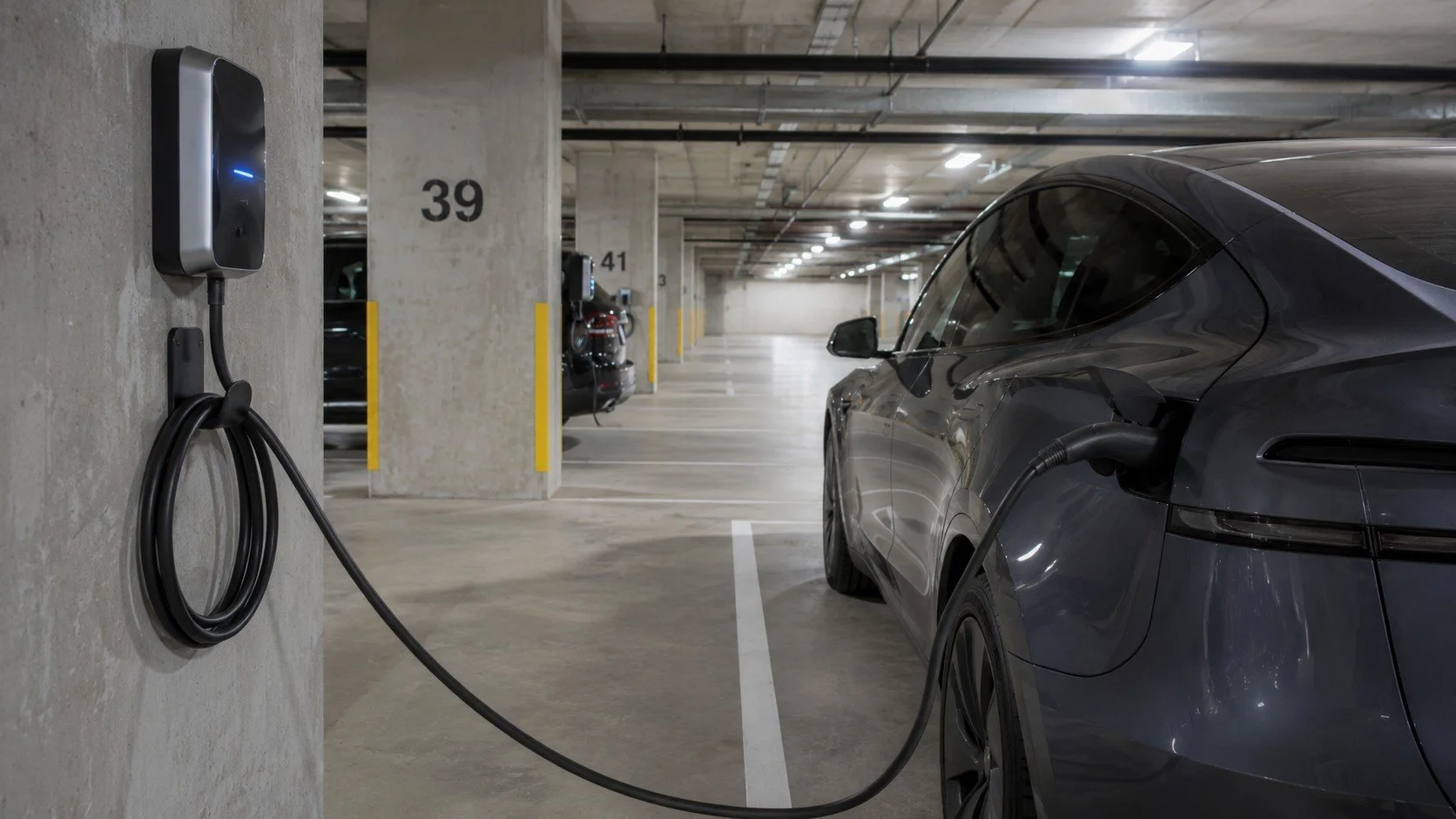
Charging an EV at a detached home is simple. Doing it in a Toronto condo or townhome takes a bit more planning, because the parking and the electrical supply are often shared. The good news is that condo and townhome charging is very doable. You just need to know the steps and bring in the right people early.
Why condos and townhomes are different
In a detached home, your panel and your parking spot are both yours. In a condo or many townhomes, the parking garage, the electrical room, and the building supply are shared or governed by the corporation. That means a charger install usually involves your condo board or property manager, not just an electrician. Where the power comes from and how it is metered are the first questions to answer.
Your charging options
A dedicated charger at your stall
The most convenient setup is a Level 2 charger wired to your own parking stall, with the energy metered back to your unit. This requires running a circuit from an approved source to your spot, which the building has to permit.
Shared or building provided charging
Some buildings install shared chargers that residents book or pay per use. If your building already offers this, your path may be much simpler. It is worth asking the property manager what already exists before planning your own.
The approval steps
A condo or townhome charger install usually follows this order:
- Ask your condo board or property manager about their EV charging policy.
- Have a licensed electrician assess the available supply and the route to your stall.
- Submit the plan for board or management approval, including metering.
- Pull the ESA permit and complete the install.
- Pass the inspection and start charging.
The Electrical Safety Authority publishes guidance for EV charging in condos and multi residential buildings, which is a useful reference for boards. (Link the ESA condo EV charging page at build time and verify the current process.)
What installation involves
The electrical side is similar to any EV charger installation, with the added work of routing the circuit through shared spaces and metering it correctly. The supply assessment matters most, since older buildings may have limited spare capacity. A licensed electrician sizes the work and coordinates with the building. For the budget side, our EV charger installation cost page covers the factors, and every customer gets a written quote first.
Getting started
The earlier you involve a licensed electrician, the smoother the approval goes, because boards often want a clear technical plan before they say yes. Kolji Bros Electrical installs EV chargers for homes, condos, and townhomes across Toronto and the GTA, and handles the permit and inspection. You can reach out any time for a quote.
Frequently asked questions
Can I install an EV charger in my condo parking spot?
Often yes, but it requires approval from your condo board or property manager, a supply assessment, correct metering, and an ESA permit. Start by asking about the building EV policy.
Who pays for a condo EV charger installation?
Usually the resident who wants the charger, including the metered energy. Some buildings share costs or provide common chargers. Confirm the arrangement with your board.
Do I need condo board approval to install a charger?
In most cases, yes. The parking and electrical supply are governed by the corporation, so a plan and approval are part of the process.
Is charging in a townhome the same as a condo?
It depends on ownership. A freehold townhome with its own panel is closer to a detached home. A condo townhome with shared supply follows the condo process.
How do I start the process?
Ask your property manager about the EV policy, then have a licensed electrician assess the supply and route. That technical plan is usually what the board needs to approve.
Want to charge your EV at a Toronto condo or townhome? Kolji Bros Electrical assesses the supply, helps with the technical plan your board needs, and handles the install, permit, and inspection. Serving Toronto and the GTA.
Book an assessment