

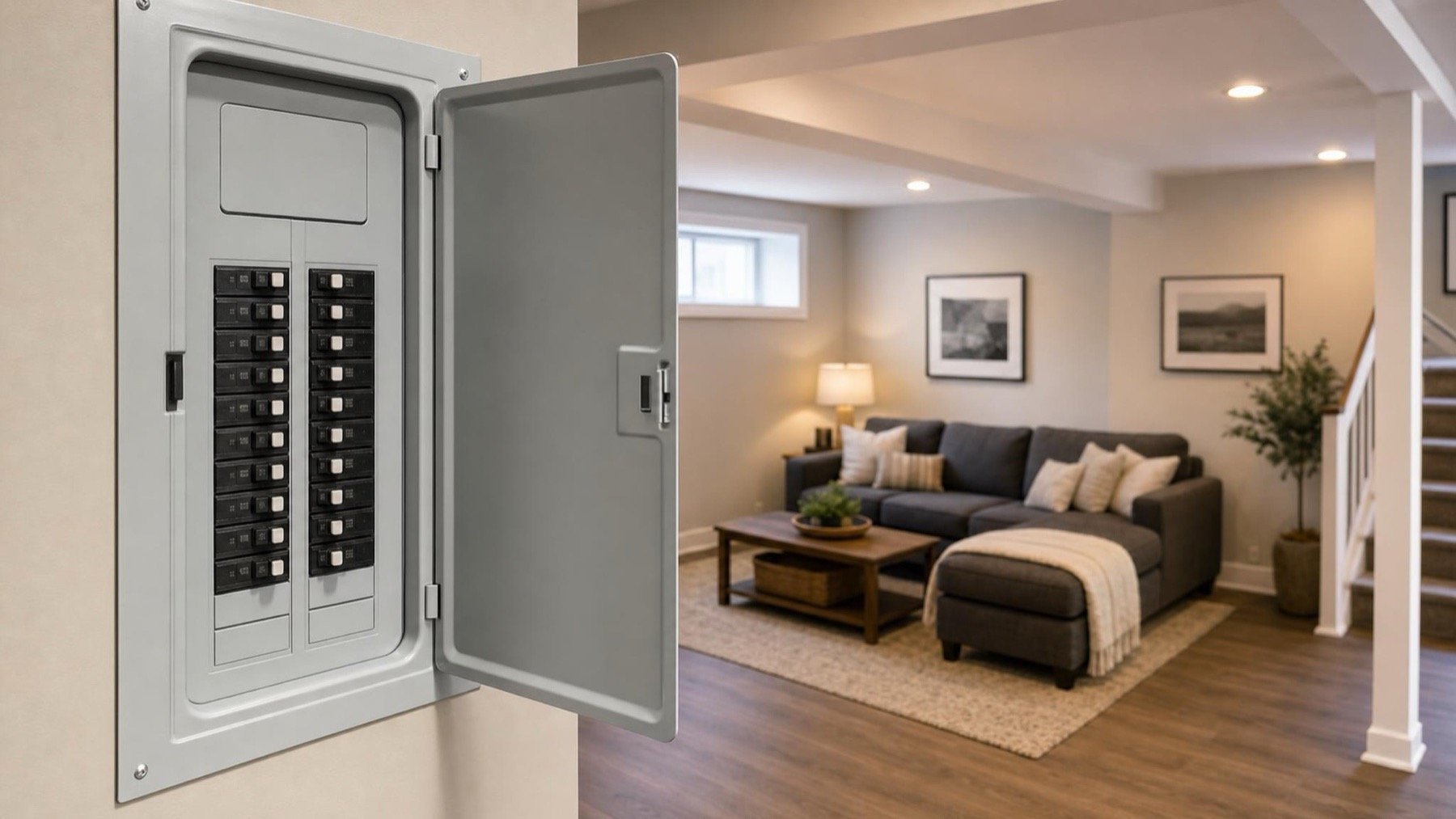
A repeatedly tripping arc fault breaker needs diagnosis. Record what was running, leave repeated faults off and keep the required protection in place.
The bedroom lights go out every time someone runs the vacuum. At the panel, the breaker with the small TEST button has tripped again. You reset it, it holds for a day or two, and then it trips again.
That breaker is an arc fault circuit interrupter, or AFCI. ESA’s podcast describes how arc fault requirements expanded in Ontario. Which protection a particular circuit needs depends on the work and the applicable code. Ask the contractor to confirm it for your installation. Repeated trips need diagnosis. Arcing, an overload, a short circuit, equipment behaviour or a problem with the breaker can produce similar symptoms. The trip alone does not identify the cause.
We test tripping AFCI circuits in homes across Toronto and the GTA, and the first thing we ask for is a record of when it trips. This guide explains how to keep that record, what you can safely check, and why swapping the AFCI for a regular breaker is the wrong fix.
What an Arc Fault Breaker Is Watching For
On ESA’s contractor podcast, technical advisor Trevor Tremblay described an arc fault as sparking or arcing in the electrical circuit that may create heat and the potential for fire. A loose connection or damaged cable may be involved, but an observation from the hallway cannot establish the fault. An ordinary breaker reacts to too much current. An AFCI also reads the pattern of the current and opens the circuit when it sees arcing that does not look normal, while ignoring the small arcs that switches and motors make every day.
An AFCI is part of the circuit’s protection, so repeated tripping deserves investigation. Keep the required protection in place while a Licensed Electrical Contractor checks the cause. Our circuit breaker replacement service covers AFCI, GFCI and combination breakers.
Real Faults and Nuisance Trips Look the Same at the Panel
From the panel, every trip looks identical. The difference shows up in the pattern, which is why your notes matter more than the number of resets.
When the Pattern Points to the Wiring
Trips with nothing plugged in, trips that started after a renovation, or trips you can tie to one outlet or switch all point toward the wiring. Tremblay listed installation problems that produce arcing an AFCI will catch, including overtightened electrical cable connectors and push in receptacle connections that can fail over time. Those need to be found and corrected. Resetting the breaker does not fix them.
When the Pattern Points to a Device
Trips linked to one appliance give the electrician a useful lead, but do not prove a harmless compatibility problem. Tremblay acknowledged that nuisance tripping may occur as equipment technology changes, and ESA asks contractors to report equipment that seems to be causing the issue so manufacturers can investigate. Record the device and model rather than moving it around to try to defeat the trip. Testing determines whether the equipment, circuit or protective device needs attention.
A Safe Check Before You Call
- Record the trip. Note the room, time and what was running from observations you already have.
- Look for warning signs. Keep clear of heat, damage, buzzing, smoke or a burning smell. Do not touch suspect equipment.
- Leave repeated faults off. Do not keep resetting a breaker or hold it on.
- Keep covers in place. Do not remove a panel cover or outlet plate to investigate.
- Book a diagnosis. Share the notes and the appliance model with a Licensed Electrical Contractor. Follow the manufacturer’s instructions for normal operation and testing.
None of these steps involve removing the panel cover or an outlet plate. Leave those closed. Our guide on why a breaker keeps tripping covers ordinary overloads and short circuits, which an AFCI also responds to.
Why a Regular Breaker Is the Wrong Fix
A standard breaker stops the trips because it no longer looks for arcing. On circuits where the Ontario Electrical Safety Code calls for arc fault protection, it also removes that protection. ESA’s route for genuine nuisance tripping runs through reporting the equipment first. The historical podcast discusses an ESA deviation process. That is not permission for a homeowner to remove required protection. The contractor must establish the current requirements with ESA.
What If Your Home Has No AFCIs?
Plenty of older GTA homes have none, and that alone does not make them non compliant. Tremblay noted that the code is typically not retroactive. When you add or extend circuits in a renovation, the requirements for the new work change, so ask about arc fault protection while you plan the job. For routine testing, follow the breaker manufacturer’s instructions and schedule. Keep testing separate from repeated fault resets.
Who Can Work on the Breaker
ESA states that in Ontario, if you hire someone to do electrical work in your home, by law it must be a Licensed Electrical Contractor. Homeowners doing their own electrical work in a home they own and live in must file a notification of work with ESA. For breaker and panel work, we recommend professional installation.
Electrical questions homeowners ask
How do you stop an arc fault breaker from tripping?
A Licensed Electrical Contractor can identify why an arc fault breaker keeps tripping and repair the cause while retaining the required protection. Record what was running, avoid repeated resets, and leave a repeatedly tripping circuit off until it has been checked.
Safety First Next Step Before the Next Trip
Record the trips you have already observed. Do not keep provoking them for a week to collect data. If it trips again, leave the circuit off and arrange a diagnosis. Keep clear of equipment showing heat, buzzing, smoke or damage. Call emergency services for smoke or fire.
Arc fault breaker still tripping?
Kolji Bros. Electrical tests the circuit, finds whether the cause is the wiring or a device, and explains the repair in plain language. Our electrical troubleshooting covers homes across Toronto and the GTA.
Licensed Electrical Contractor, ECRA/ESA #7015453.